

GI product sectors Nepal can protect regional product names through trademark registration at the Department of Industry (DoI), although the Patent, Design and Trademark Act 1965 does not offer a separate GI registration route. A typical unopposed trademark case takes about 12–14 months, with one application required for each NICE class.
Key Takeaways
Nepal protects product names through the DoI trademark system under the Patent, Design and Trademark Act 1965. Wines, foods and handicrafts often need different NICE Classification Nepal filings, while a trademark registration gives rights in a mark, not automatic control over a region, recipe or traditional production method.
- Nepal is first-to-file, so a producer group should clear and file a distinctive regional mark early.
- Wine and spirits usually fall in NICE Class 33; beer and non-alcoholic drinks belong in Class 32.
- Food goods can fall in Classes 29, 30 or 31 depending on processing and ingredients.
- Handicraft IP protection may require Class 24 for textiles, Class 14 for jewellery, or Class 20 for certain decorative goods.
- One trademark application covers one class only, even if the same name appears on several product types.
- After publication in the Industrial Property Bulletin, a trademark faces a 90-day opposition window.
- A registered mark lasts seven years from registration and can be renewed in further seven-year terms.
How are GI product sectors protected in Nepal?
Nepal protects a regional product name mainly through trademark registration with the DoI under Sec. 18 and Sec. 18A of the Patent, Design and Trademark Act 1965. The process tests the mark against prior rights and registrability; it does not create a separate geographical-origin certificate for every producer in a named area.
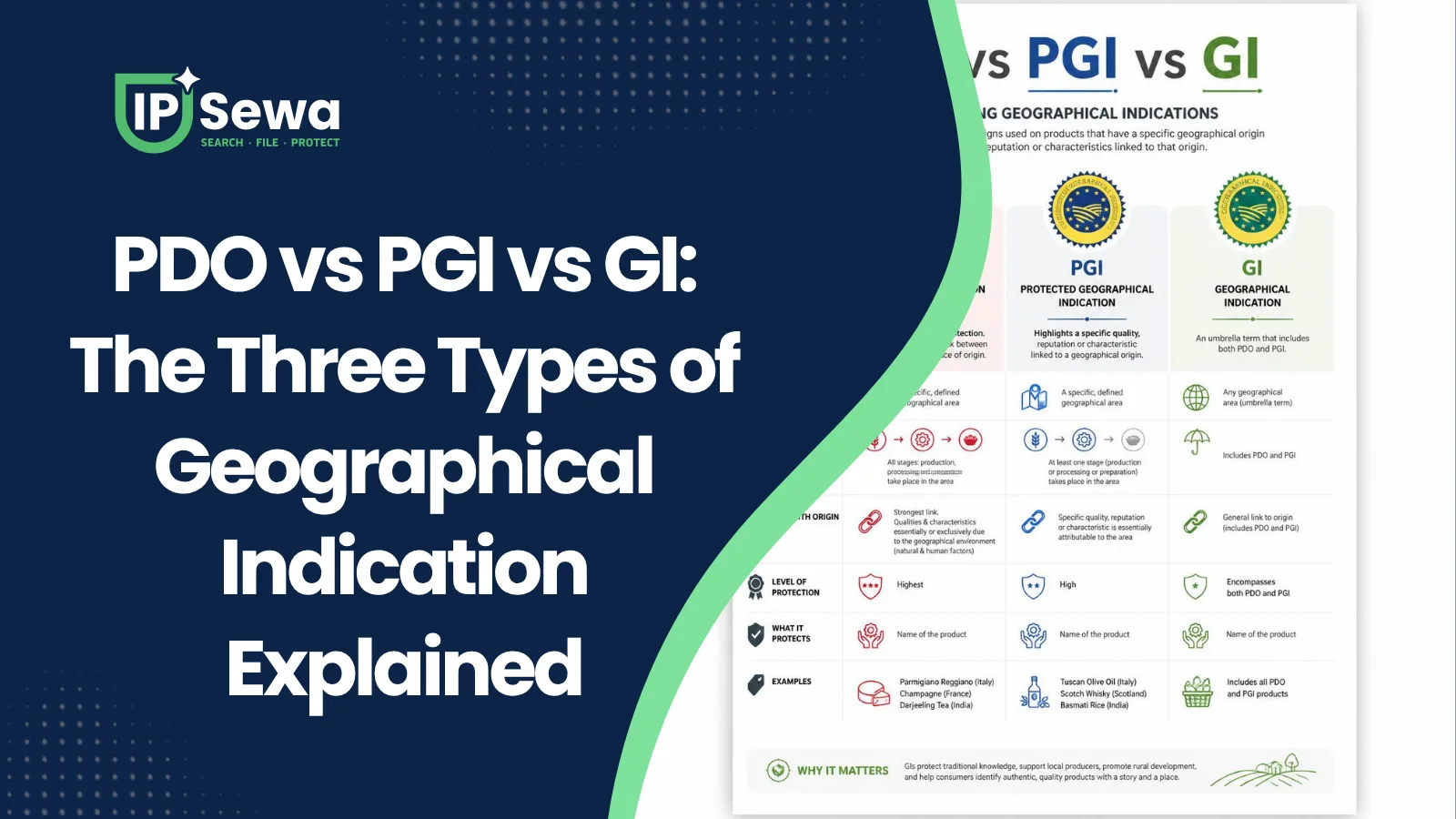
A geographical indication, or GI, identifies goods as coming from a place where qualities, reputation or features are linked to that origin. Think of a name connected with a hill district, local crop, weaving tradition or distilling practice. A trademark instead identifies the commercial source of goods or services.
That difference matters. A cooperative might register a distinctive logo and name used by its approved members, but registration does not automatically give it ownership of ordinary geographic words. A mark that is purely descriptive, misleading, or too close to an earlier mark can still face refusal or opposition.
Nepal participates in the international IP framework through bodies and agreements including WIPO, the Paris Convention and TRIPS. Yet protection in Nepal remains national: an overseas registration does not itself secure a Nepali registered mark. Foreign producers should appoint a Nepal-based representative for direct filing at the DoI.
Which NICE classes apply to wine and spirits in Nepal?
Wine trademark Nepal applications usually belong in NICE Class 33, which covers alcoholic beverages except beer. The DoI applies the 45-class NICE Classification system, and Sec. 18A requires a separate application for each class. A distiller selling spirits and beer therefore needs Class 33 and Class 32 filings.
Class 33 is the natural starting point for grape wine, fruit wine, whisky, rum, liqueurs and traditional alcoholic drinks sold under a brand. The source ingredients do not change the class. A millet-based spirit and a grape wine can both sit in Class 33 if they are alcoholic beverages.
Do not overlook the wider range. Beer, mineral water and non-alcoholic beverages generally sit in Class 32. A winery that also runs a tasting room, restaurant or bar may need a separate service-class application, commonly Class 43, for hospitality services. The goods mark does not automatically protect the venue name.
A common mistake we see is treating a local drink name as exclusive because it describes a traditional style. Stronger protection usually comes from pairing the place reference with a distinctive house name, emblem or label design. Search both exact wording and close sound-alikes before packaging is printed.
Which NICE classes cover food and agricultural products?
Food trademark registration Nepal depends on what the product is at sale: Class 29 commonly covers preserved foods, Class 30 covers many prepared staple foods and Class 31 covers raw produce. The DoI examines each class separately, so an agricultural brand may need several applications before its full product range is protected.
Class 29 can cover preserved, dried or cooked fruits and vegetables, dairy goods, edible oils, pickles and meat products. Class 30 commonly covers tea, coffee, spices, flour preparations, sauces, confectionery and many snack foods. Class 31 is the usual home for fresh fruit, vegetables, unprocessed grains, seeds and live plants.
Consider a realistic example: Himal Dharan Apple Collective sells fresh mountain apples, dried slices and apple jam. Fresh apples point to Class 31. Dried fruit and jam may call for Class 29. If the group later opens a café under the same sign, it should assess a further filing for its service activity.
The name is fictional, but the filing lesson is real. Map every product you intend to sell in the next few years, then choose classes by the actual goods description rather than by the farm’s location. This avoids a certificate that covers only part of your business.
How does handicraft IP protection differ from food and drink protection?
Handicraft IP protection begins with the finished material and goods, not the craft’s district name. The DoI uses NICE Classification Nepal across 45 classes: textiles often sit in Class 24, jewellery in Class 14 and selected furniture, frames or decorative craft goods in Class 20. Each class needs its own application under Sec. 18A.
For example, a Dhaka textile label may need Class 24 for fabric and textile goods. A Pashmina brand can require careful wording based on the goods actually offered. A metal jewellery line is more likely to need Class 14, while a workshop selling wooden home décor may need to consider Class 20.
Trademark protection covers the wordmark, logo or label that tells buyers who stands behind the goods. It does not protect the physical appearance of a newly created vase, packaging shape or ornament by itself. Where appearance is commercially important, industrial design registration may be a better parallel right.
That is especially useful for a craft enterprise with a distinctive lamp shape, carved box pattern or product presentation. Our team can help compare a trademark filing with industrial design registration support before you choose a protection route. The right answer may be both, not one or the other.
How do producers register a regional product trademark in Nepal?
Producers register a regional product trademark by filing with the DoI, passing examination, publishing in the Industrial Property Bulletin, completing the 90-day opposition period and obtaining a certificate. Under Sec. 17–18 and Sec. 21A of the Patent, Design and Trademark Act 1965, the usual unopposed timeline is about 12–14 months.
- Clear the name and logo. Check earlier marks in the same and related classes, including similar spellings, sounds and visual elements.
- Select the goods or services. Match each product to the correct NICE class and prepare a precise goods description.
- Prepare the filing record. Confirm the applicant’s legal name, authority to file and the mark specimens before submission.
- File at the DoI. The application date matters because Nepal follows first-to-file priority rather than first use.
- Respond during examination. The DoI reviews conflicts and registrability and may require clarification or a response.
- Wait through publication and opposition. A qualified mark appears in the Industrial Property Bulletin, where others may oppose within 90 days.
- Receive and maintain the certificate. If the application succeeds, registration follows; renew it every seven years.
What documents and costs should a producer group plan for?
A Nepali applicant generally files the prescribed application, mark label, notarised power of attorney, company authority documents, industry certificate and current tax-clearance record with the DoI. Foreign applicants file through a Nepal-based representative and usually need authenticated home-registration or priority documents. Total cost depends on classes, document work and professional handling rather than sector alone.
Prepare clean, consistent ownership records. If a cooperative owns the mark, use the cooperative’s full legal name consistently on the application, label approvals and authority documents. If several independent producers use one label, agree in writing who owns it and what quality or use rules apply before filing.
Government charges apply per class, while professional work can vary with clearance analysis, document preparation, examination responses and any opposition. Use the trademark fee calculator for a current starting estimate, then ask for advice if the mark covers several sectors or owners.
What are the main risks with regional product names?
Regional product names face refusal or dispute when they are descriptive, misleading, already registered or likely to damage another mark’s goodwill under Sec. 18. The DoI can also cancel a registered trademark that is not used within one year of registration under Sec. 18C, so filing without a real launch plan is risky.
| Situation | Practical protection approach | Common risk |
|---|---|---|
| Traditional spirit with a new label | File the distinctive brand in Class 33; assess Class 32 if beer is also sold. | Trying to monopolise a generic drink style. |
| Fresh produce and processed foods | File in Classes 31, 29 or 30 according to each finished product. | Leaving jam, dried goods or tea outside the filing. |
| Textile and craft collection | File for actual textile, jewellery or craft goods; consider design rights for appearance. | Assuming one textile filing covers all craft items. |
| Producer association name | Use a clear ownership and permitted-user arrangement before filing. | Internal conflict over who may use the mark. |
A first-to-file system rewards preparation, but a rushed application can create a weak asset. Search early, choose goods carefully and keep evidence of genuine market use. Do not use ® until registration is complete; TM can signal a claimed brand, but it does not replace a DoI registration certificate.
How long does GI-related trademark protection last in Nepal?
A registered trademark lasts seven years from registration under Sec. 18D of the Patent, Design and Trademark Act 1965 and may be renewed indefinitely in seven-year terms. The DoI process typically takes 12–14 months when unopposed; only the smoothest straightforward matters may finish in roughly 6–8 months.
In short: classify the actual goods, not just the region behind them. A wine label, food brand or handicraft mark can become a valuable commercial asset in Nepal, but it needs a distinctive sign, the right classes, clear ownership and timely renewal. This is general information, not legal advice.
What should a producer do before filing a GI-related brand?
A producer should search earlier marks, define who owns the proposed mark and list every product class before filing with the DoI. Because Nepal is first-to-file under the Patent, Design and Trademark Act 1965, a careful clearance review before launch can prevent a costly rebrand, objection or opposition after the Industrial Property Bulletin publication.
Start with a practical search of Nepal’s public trademark records, then look beyond exact matches to similar names and competing product categories. For a high-value regional brand, our team can help with a professional clearance review and trademark registration support in Nepal, including class selection and DoI filing.
For official institutional information, consult the Department of Industry and the World Intellectual Property Organization. A local adviser can also assess whether the name should be paired with industrial design protection, contracts for permitted users, or an enforcement plan.
People also search for
These related Nepal IP guides explain product branding, craft protection and the difference between trademarks and other rights under the DoI system.
- GI vs trademark: protecting regional products in Nepal
- Trademarks for food and beverage brands in Nepal
- Trademark Class 29 for meat, dairy and food products in Nepal
- How to protect a handicraft or Pashmina brand in Nepal
- Trademark registration for handicraft exporters in Nepal
- How to protect product packaging design in Nepal
- Fighting counterfeit products under Nepal IP law
Before you print labels or launch goods, search Nepal’s trademark database, speak with our team through IP Sewa contact support, and use our free trademark and NICE classification tools to plan your filing.












Comments (0)
Leave a comment
Replying to — cancel