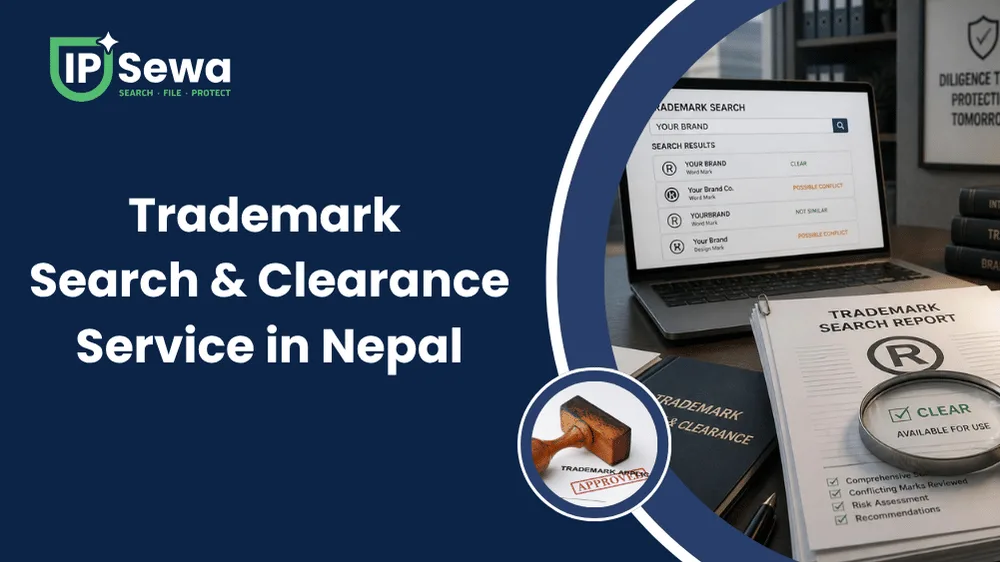
A professional pre-filing trademark search and clearance opinion across Nepal's published marks, so you file a name that can actually register.
We run a professional pre-filing trademark search and give you a written clearance opinion before you spend a rupee filing at the Department of Industry (DoI). Our team checks Nepal's ~68,700 registered and pending marks for identical and confusingly similar names in your NICE class, then tells you plainly whether to file, refine, or rebrand.
Key Takeaways
A clearance search checks for identical and confusingly similar marks in your goods' NICE class before you file at the DoI.
Nepal is first-to-file — an earlier similar mark can block yours and sink the filing fee, so search first.
Our free /search tool is a self-serve name check; a firm clearance opinion adds class analysis, phonetic and visual conflict review, and a written risk verdict.
A clean opinion cuts your risk of refusal on relative grounds and of a 90-day opposition from an existing owner.
Turnaround is typically a few business days; complex or multi-class brands take a little longer.
Search is qualitative on cost — contact us for a quote; it is far cheaper than a wasted filing or a rebrand.
What a trademark clearance search is
A clearance search screens a proposed brand name or logo against the register to find marks that would block it or invite opposition. In Nepal that means checking the DoI's records — the same data behind the Industrial Property Bulletin — for identical marks and, more importantly, confusingly similar ones in the same or related NICE class. It answers one buying question: can this name actually register?
The risk is real because Nepal runs a first-to-file system under the Patent, Design and Trademark Act 1965. Whoever files first generally holds priority, so an existing similar mark can get your application refused on relative grounds or trigger a challenge during the 90-day opposition window after publication. A search moves that discovery to before you file, when changing course is cheap.
Free /search tool versus a firm clearance opinion
Our public /search tool lets anyone type a name and see matching published marks instantly — a fast, self-serve availability check that is genuinely useful as a first look. A firm clearance opinion goes further: a trained reviewer sets the correct class, hunts phonetic and visual near-matches the exact-text tool misses, weighs the conflict, and hands you a written risk verdict you can act on.
The difference matters because trademark conflict is not about exact spelling. Two marks can be "confusingly similar" through sound, meaning, or appearance — Zenith versus Zenyth, a bird logo versus a similar bird logo — even when a keyword search returns nothing. Examiners and opponents judge the overall impression on the average consumer, and that judgement is what our opinion mirrors.
Comparison of the free IP Sewa /search tool and a professional trademark clearance opinion in NepalA two-column grid: the free self-serve search lists instant name matches and exact-text results; the clearance opinion lists NICE class analysis, phonetic and visual conflict review, a written risk verdict and filing guidance.Free /search toolInstant, self-serve name checkMatches against the registerMostly exact-text resultsNo class or conflict analysisA useful first lookClearance opinionCorrect NICE class set for youPhonetic + visual near-matchesConfusing-similarity assessmentWritten risk verdictFile, refine or rebrand adviceWhat the free self-serve trademark search covers versus a professional clearance opinion from IP Sewa in Nepal.What's included in our search service
Every clearance engagement includes class identification, an identical-mark search, a similar-mark search across phonetic and visual variants, a conflict assessment against the confusing-similarity standard, and a written opinion with a clear recommendation. For logo marks we review the device elements, not just the wording, since a picture mark can conflict on appearance alone.
Class identification — we map your goods or services to the right NICE class (of 45) so the search targets the marks that matter.
Identical-mark search — exact and near-exact hits on the DoI register in your class.
Similar-mark search — phonetic equivalents, misspellings, translations and lookalike logos that a plain text search skips.
Conflict assessment — each hit weighed for how likely it is to block registration or draw opposition.
Written clearance opinion — a plain-language verdict: proceed, adjust the mark or goods, or choose a new name.
Filing guidance — if it clears, we hand you straight to the registration step.
The process we run for you
We start from a short brief, set your class, run the identical and similar searches, assess the conflicts, and deliver the written opinion — usually within a few business days. You do not touch the register yourself; you give us the name and the goods, and we return a decision you can bank on. Multi-class or logo-heavy brands take a little longer because each class is a separate search.
Because Nepal is not a member of the Madrid System, there is no single international filing that clears you here — every mark must be searched and filed nationally at the DoI. That national focus is exactly what our team is built for, working directly with the Nepal register rather than a global database that omits local marks.
What you provide
To start we need three things: the proposed name or logo file, a description of the goods or services you will sell under it, and any priority markets or sub-brands you are considering. That is enough to fix the class and run a meaningful search. If you are weighing several names, send them all and we will screen the shortlist together so you back the strongest option.
Clear inputs sharpen the result. A vague description like "we sell products" forces a broad, less useful search, while "handmade leather bags and wallets, retail" points straight at the right class and the marks that could conflict. If you are unsure how to describe your goods, our team will help you frame them during the brief.
At-a-glance trademark clearance timeline in Nepal, from brief on day zero to a written opinion within a few business daysA horizontal timeline with three points: brief on day zero, search underway across days one to two, and the written opinion delivered within a few business days.0Briefname + goods1–2Search + assessidentical + similarFewOpinionwritten verdictAn at-a-glance trademark clearance timeline in Nepal — brief to written opinion, typically within a few business days.Why clear a mark before you file
Filing a name that conflicts wastes the government fee, delays your launch by months, and can invite a formal opposition or an infringement claim from the earlier owner. Under first-to-file, the earlier mark usually wins, so discovering the clash after you have printed packaging and signage is the expensive way to learn. Clearance turns a costly surprise into a cheap, early decision.
A search also protects the brand you are building. If the name is clear, you file with confidence and a stronger claim; if it is not, you pivot before the market ever sees it. Either way you avoid pouring marketing spend into a name someone else can force you to drop. For the mechanics of doing the check yourself first, see our guides on how to search for a trademark in Nepal and running a trademark name availability check.
Why IP Sewa
We built and maintain the search engine behind Nepal's largest public trademark index — roughly 68,700 marks extracted from every DoI Industrial Property Bulletin — so our clearance work runs on data we know cold. That combination of a local dataset and hands-on filing experience is what lets us judge a conflict the way a DoI examiner would.
Our team handles the search, the class call, and the filing that follows under one roof, so nothing is lost in a handover. When a name clears we move straight to registration; when it does not, we tell you honestly and help you find one that will. To understand how examiners weigh a clash, read our guide on confusingly similar trademarks in Nepal.
Ready to clear your mark?
Send us your proposed name and the goods it will cover, and we will run the search and return a clear verdict. Start with the free /search tool for an instant first look, then contact us for a full clearance opinion before you file. It is the cheapest insurance a new brand can buy in Nepal's first-to-file system.
Ready to get started with Trademark Search & Clearance?
Talk to an IP professional — we’ll guide you from the first question to a registered right.
Frequently asked
The free /search tool gives an instant, self-serve check for matching published marks — a useful first look. A clearance opinion adds class analysis, phonetic and visual conflict review, and a written risk verdict from our team telling you whether to file, refine, or rebrand.
Most searches return a written opinion within a few business days of your brief. Simple single-class names are fastest; multi-class brands or logo marks take a little longer because each class and each device element is searched separately for conflicts.
Yes. The free tool mostly catches exact-text matches, but the DoI can refuse a mark for being confusingly similar in sound, meaning, or appearance. A professional search hunts those near-matches, which is exactly where a self-serve check tends to miss a real conflict.
It means another mark is close enough in sound, look, or meaning that an average consumer could confuse the two for related goods. Nepal's DoI can refuse a mark on this ground even without identical spelling. Our guide on confusingly similar trademarks explains how examiners weigh it.
A search is only meaningful within the right class. Nepal uses the 45-class NICE system, and conflicts are judged mostly against marks in the same or related classes. Set the wrong class and you either miss a real block or flag harmless marks in unrelated goods.
Send the proposed name or logo file and a clear description of the goods or services you will sell under it. If you are weighing several names, send the whole shortlist. Clear goods descriptions produce a sharper search than a vague "we sell products."
Yes. For logo or device marks we review the visual elements, since a picture mark can conflict on appearance alone. We check for lookalike devices in your class, not only the wording, because two logos can be confusingly similar even with different brand names.
We tell you plainly and explain the conflict, then help you adjust the mark, narrow the goods, or choose a stronger name. Finding out before you file saves the government fee, the months of delay, and the risk of a later opposition or infringement claim.
No. Nepal is not a member of the Madrid System, so there is no international registration that clears or protects you here. Every mark must be searched and filed nationally at the Department of Industry, which is exactly what our clearance service covers.
Cost depends on the number of names, classes, and whether logos are involved, so we quote per engagement rather than list a figure. It is far cheaper than a wasted filing fee or a forced rebrand. Contact us with your brand details for a quote.