
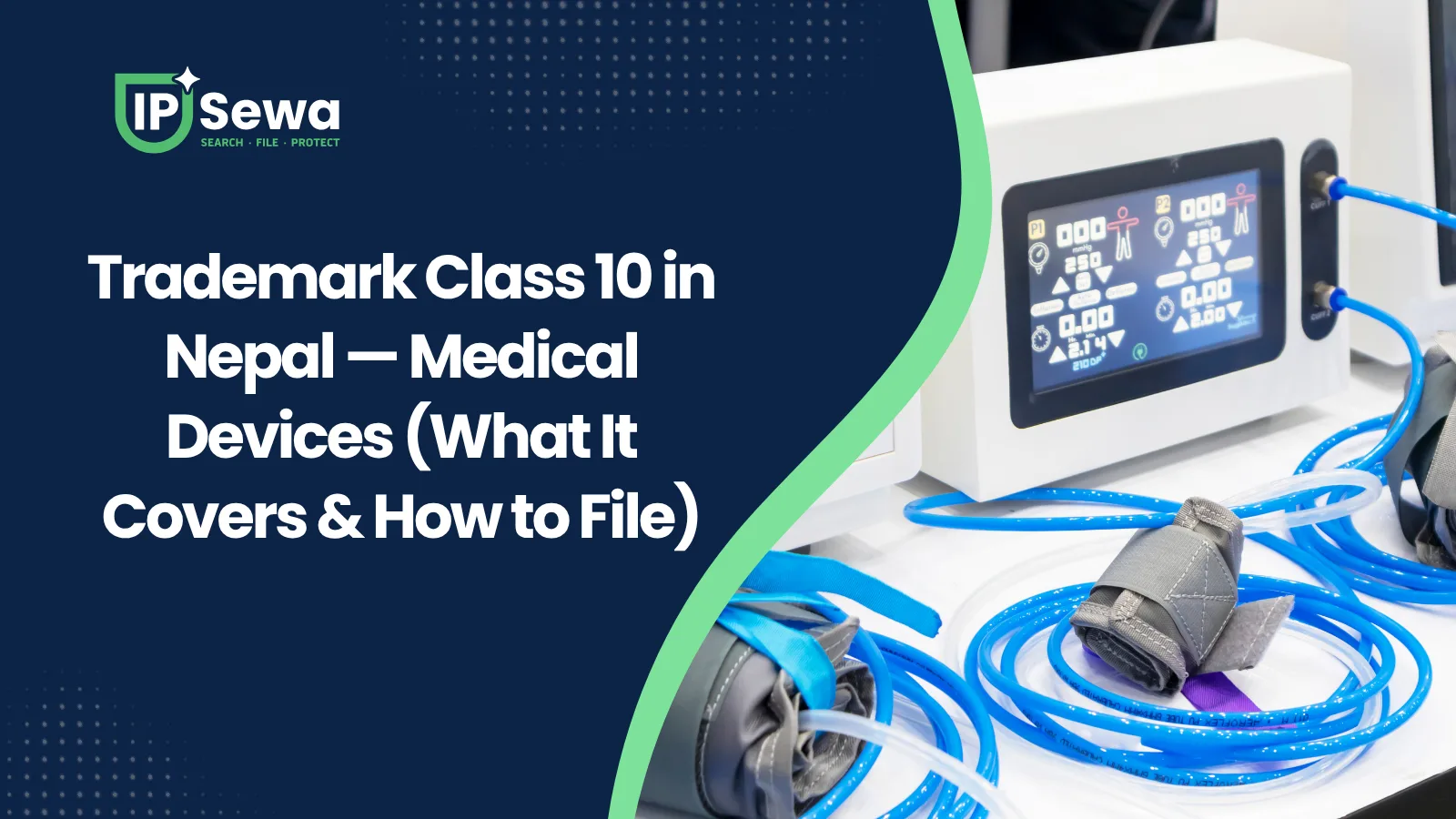
Trademark class 10 Nepal covers medical devices, surgical and dental instruments, orthopaedic articles and related healthcare apparatus. You file with Nepal’s Department of Industry (DoI) under the Patent, Design and Trademark Act 1965. An unopposed application typically takes about 12–14 months, and registration lasts seven years before renewal.
Key Takeaways
Class 10 protects healthcare hardware, not every product sold by a medical business. The NICE Classification separates devices from medicines, dressings, software and retail services. In Nepal, one trademark application covers one class, so your brand may need additional applications for other goods or services.
- NICE Class 10 is the main class for medical, surgical, dental and veterinary apparatus and instruments.
- It includes prosthetic limbs, artificial eyes and teeth, orthopaedic supports, diagnostic devices and hearing aids.
- Medicines, pharmaceutical preparations and medical dressings generally belong in Class 5, not Class 10.
- Wheelchairs and mobility scooters are generally Class 12 goods, while some medical furniture falls in Class 20.
- A Nepalese importer, manufacturer, distributor or private-label seller can apply for a Class 10 trademark.
- Nepal follows a first-to-file system. Filing early can matter more than proving that you used the brand first.
- Class 10 registration is renewable every seven years through the Department of Industry.
What does trademark class 10 Nepal cover?
NICE Class 10 covers physical goods used for medical, surgical, dental or veterinary purposes. The class includes apparatus, instruments, implants, prosthetic articles, orthopaedic supports, suture materials, therapeutic equipment and assistive devices adapted for people with disabilities. It is a goods class, not a healthcare-service class.
The practical theme is simple: Class 10 usually covers the device itself. Examples include surgical knives, forceps, catheters, syringes, diagnostic apparatus, defibrillators, glucometers, inhalers, oxygen concentrators, hospital beds, dental instruments, contact lenses and hearing aids.
It can also cover goods that serve a specialised healthcare purpose. These may include compression garments, crutches, physiotherapy apparatus, massage apparatus, breast pumps, feeding bottles, infant incubators, artificial limbs, artificial teeth, artificial eyes and intraocular prostheses.
Classification depends on the goods’ purpose and wording. A generic product name can be too broad. “Smart health monitor” may need a closer review because the physical instrument, downloadable software and online service can fall into different classes.
Which Class 10 goods can a Nepal business protect?
Nepal businesses can list medical devices, instruments and related healthcare articles that they make, import, distribute or sell under their brand. The application should identify real goods with clear wording. A broad claim covering “all medical equipment” may create examination problems or fail to match your actual trade.
| Business product or activity | Likely class | Practical point |
|---|---|---|
| Surgical instruments and dental apparatus | Class 10 | Describe the instruments and their medical purpose. |
| Diagnostic machines and monitoring devices | Class 10 | State the medical function, such as testing or monitoring. |
| Medicines, pharmaceutical preparations and dressings | Class 5 | Do not place these in Class 10 merely because hospitals use them. |
| Medical-device software or downloadable applications | Often Class 9 | Review the software function and filing scope separately. |
| Wheelchairs and mobility scooters | Class 12 | Mobility use can move the product outside Class 10. |
| Retail or wholesale of medical goods | Class 35 | Trading services are separate from the goods themselves. |
This table gives direction, not a substitute for product review. The NICE class finder can help you sort an initial product list. For unusual goods, a professional classification review is safer than copying a competitor’s specification.
Which NICE classes should medical businesses consider?
Medical businesses should review every product and service they offer before filing. Class 10 covers devices, Class 5 covers many medicines and dressings, Class 9 may cover software, and Class 35 covers retail services. One Nepal application covers one class, so a wider brand plan can require multiple applications.
A manufacturer of blood-pressure monitors may focus on Class 10. If it also provides downloadable monitoring software, Class 9 may matter. If it operates an online medical-equipment store, Class 35 may be relevant. A clinic using the brand for medical treatment services should examine Class 44.
Do not assume that one Class 10 registration protects every use of your name. Registration normally protects the mark for the goods listed in the application and the class filed. A wordmark, logo or combined mark also needs a clear filing strategy. You can read more about word marks, device marks and combined marks before choosing the representation.
How do you file a Class 10 trademark in Nepal?
You file a Class 10 trademark with the Department of Industry by identifying the mark, selecting precise goods and completing the statutory examination process. The mark is published in the Industrial Property Bulletin before registration. Anyone may oppose within 90 days of publication, so filing is not the same as immediate protection.
- List your actual goods. Write down each medical device, instrument or healthcare article sold under the mark. Separate physical products from software, retail and clinical services.
- Search for earlier marks. Nepal is first-to-file. Search similar names, spellings, sounds and logos in the relevant class before spending money on packaging or imports. You can search Nepal’s trademark database for existing records.
- Confirm the NICE class. Use Class 10 for qualifying devices and consider separate classes for medicines, software, retail or medical services. The goods wording should be specific enough for examination.
- Prepare and file. Submit the prescribed application, mark representation and supporting papers to the DoI. The application should identify the applicant correctly and include the Class 10 specification.
- Answer examination issues. The DoI examines similarity, registrability and the application details. If it raises an objection or asks for clarification, respond within the stated period.
- Follow publication and opposition. A qualified mark appears in the Industrial Property Bulletin. Third parties have a 90-day opposition window. An opposition can delay certification and require a formal response.
- Obtain and preserve the certificate. After the process is cleared, the DoI registers the mark and issues the registration certificate. Record the registration date and renewal deadline.
Our team can help with the clearance review, specification, filing and prosecution through the Nepal trademark registration service. A search is useful, but it cannot guarantee registration because the DoI makes the final decision.
What documents are needed for a Class 10 application?
A Nepalese applicant normally prepares the application form, mark label, notarised Power of Attorney, company board resolution, industry certificate and latest tax-clearance letter. The DoI may also need a certified filing record for a Paris Convention priority claim. Foreign applicants add home-registration evidence and file through a Nepal-based representative.
The mark label should match the version you intend to use. If you want protection for a medical-device name and a separate logo, consider whether a wordmark, device mark or combined mark fits your commercial plan.
Keep product literature consistent with the goods specification. “Medical devices” may not explain whether you sell diagnostic apparatus, orthopaedic supports or dental instruments. A clean list helps the DoI understand the scope and helps you defend the registration later.
How long does Class 10 trademark registration take in Nepal?
Class 10 registration in Nepal typically takes about 12–14 months from filing to certificate when the application is unopposed. A smooth, straightforward matter may finish in about 6–8 months, but that is the favourable end rather than the normal promise. Objections, amendments and opposition can extend the timeline.
What does a Class 10 trademark cost in Nepal?
The total cost depends on the number of classes, government filing and registration charges, professional work, document certification, translations and any examination or opposition response. Nepal’s one-class rule means a medical brand covering devices and retail services may need separate applications. Check the current position through the IP Sewa tools or contact our team.
Government charges and professional fees are separate. Foreign applicants may also face added representative, certification and translation work. Do not choose a specification only because it appears cheaper; an incomplete class strategy can leave important products exposed.
What is the legal basis for Class 10 registration?
The Patent, Design and Trademark Act 1965 governs trademark registration in Nepal, while Sec. 18A supports class-based filing. Sec. 18 addresses examination and registration, Sec. 21A concerns publication and opposition, and Sec. 18D and Sec. 23B govern the seven-year term and renewal. The DoI administers the system.
The Act protects a registered mark against unauthorised use and bars registration of marks that conflict with another mark or damage its goodwill. Nepal also uses the international NICE Classification in practice. WIPO’s explanation of the NICE Classification is useful for understanding class headings, but the Nepal filing remains national.
What common Class 10 filing mistakes should you avoid?
Businesses often file the wrong class, use vague goods wording or search only exact spellings. They also assume a company name, import licence or domain name creates trademark rights. Nepal is first-to-file, and the DoI can refuse a mark that is already registered, confusingly harmful to another mark or otherwise barred under the Act.
- Confusing Class 5 with Class 10: a medical use does not make every product a device. Medicines and many dressings belong in Class 5.
- Ignoring services: selling medical goods and providing medical treatment are not the same as manufacturing the goods.
- Searching only the logo: similar words and sound-alike marks can create risk even when the artwork differs.
- Using a broad list: list goods you genuinely plan to make, import or sell under the mark.
- Launching before filing: public disclosure and market investment can increase risk if another applicant files first.
- Missing deadlines: examination responses, the opposition window and renewal dates need active attention.
Can a Nepal medical-device importer file the brand?
A medical-device importer or distributor can file a trademark for the brand it uses on qualifying Class 10 goods, provided the applicant and commercial rights are correctly recorded. A manufacturer, private-label business, hospital supplier or foreign owner may also apply. The mark should identify the relevant goods, not merely describe their function.
Hypothetical example: imagine “Himal Care Instruments” importing patient monitors and dental handpieces into Nepal. It could assess Class 10 for those devices, Class 35 for branded retail or wholesale services, and Class 9 if it separately supplies downloadable device software. Each class needs its own application.
If the owner is overseas, Nepal does not participate in the Madrid System. The foreign business must file directly in Nepal through a Nepal-based agent or representative. A Paris Convention priority claim may be available where the required foreign filing evidence is supplied. Ask for a document review before relying on priority.
What happens after a Class 10 trademark is registered?
After registration, use the mark as registered and keep ownership, address and product records consistent. The registration lasts seven years and can be renewed for further seven-year terms. A mark that is not put into use within the relevant statutory period may face cancellation. Renewal and enforcement are separate tasks from filing.
Use of the TM symbol does not itself prove registration. The ® symbol should be reserved for a mark that is actually registered for the relevant goods. If another applicant publishes a confusing Class 10 mark, an opposition may be filed within the 90-day period. Our team can help with a staffed trademark opposition and enforcement service; this is not an automatic public alert promise.
What are the alternatives and edge cases for Class 10?
Class 10 may not be the only protection your product needs. A medical-device brand can involve physical goods, software, retail services, clinical services, packaging and manufacturing. Trademark registration protects the source-identifying name or logo. It does not replace regulatory approvals, patent protection for a technical invention or industrial-design protection for product appearance.
A technical invention may need a separate patent assessment. A distinctive device shape may raise an industrial-design question. A logo may also require copyright advice, which is separate from trademark registration. Review the full portfolio through IP Sewa’s Nepal IP registration services rather than forcing every asset into Class 10.
What should you do before filing a Class 10 mark?
Before filing, freeze the proposed spelling and logo, identify the applicant, list each actual Class 10 product and search similar Nepal records. Then check whether software, retail or medical services need additional classes. This preparation gives the DoI a clearer application and helps your business avoid an expensive rebrand after launch.
Keep evidence of planned use, supplier arrangements and product descriptions. These records help your team answer questions and manage future enforcement. A clearance search cannot remove every legal uncertainty, but it is far better than relying on an exact-name search or an overseas registration.
In short: NICE Class 10 is the right starting point for many medical devices, instruments, prosthetics and orthopaedic goods in Nepal. File one application for each class, search before filing, prepare precise goods wording, expect about 12–14 months in a normal unopposed matter, and renew the registration every seven years.
People also search for:
- What is the NICE Classification and how do trademark classes work?
- How do you choose the right trademark class in Nepal?
- What is the difference between goods and services classes?
- What does trademark Class 5 cover for pharmaceuticals in Nepal?
- Does medical software belong in trademark Class 9?
- What is a trademark in Nepal?
Start by searching existing Nepal trademarks, then use our contact page for a practical Class 10 clearance and filing discussion. Our trademark registration team can help you prepare the goods specification and handle the DoI process. This article is general information, not legal advice.










Comments (0)
Leave a comment
Replying to — cancel