
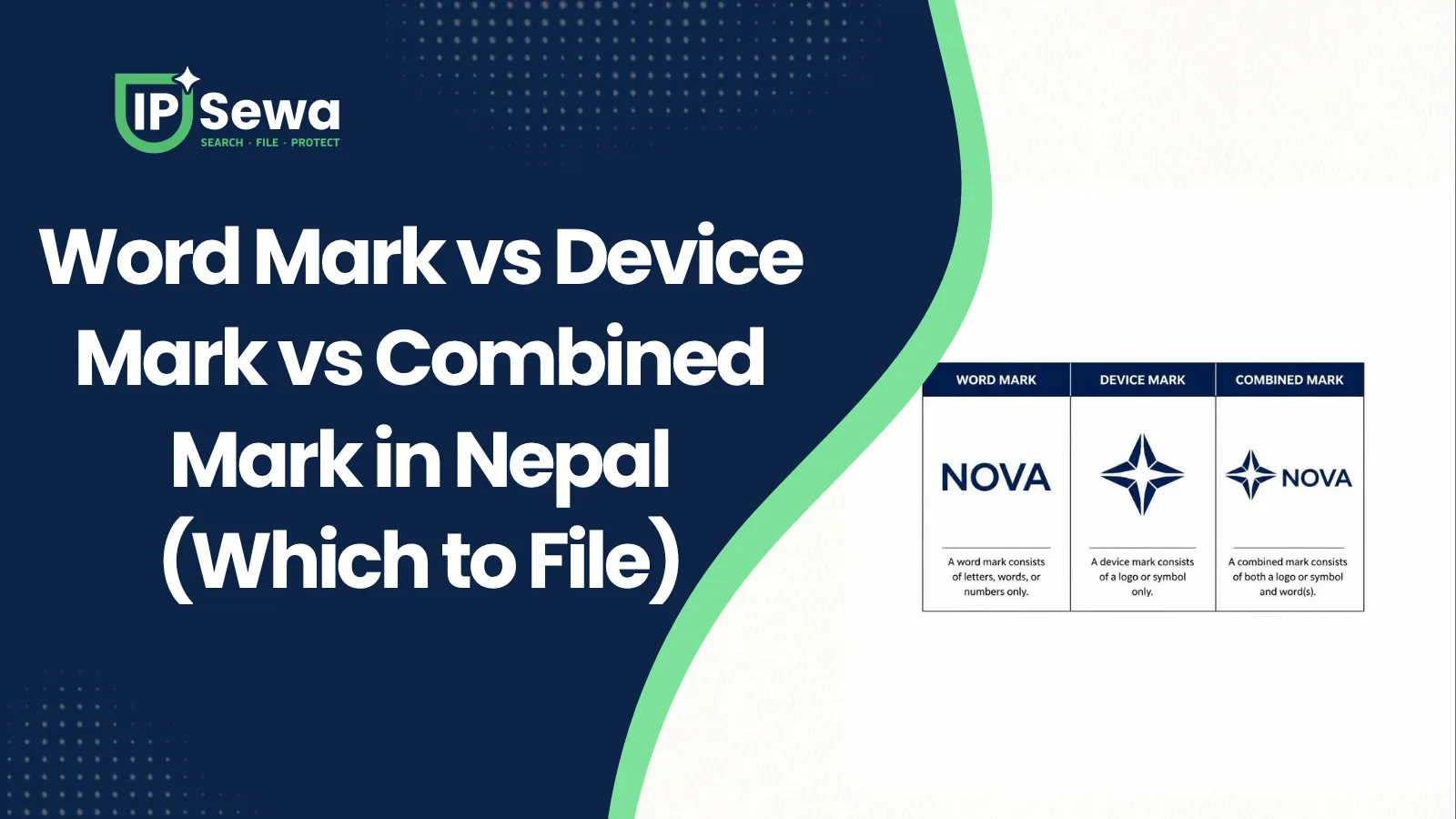
In Nepal, a word mark protects a brand name, a device mark protects a logo, and a combined mark protects their specific arrangement. You file the chosen mark with the Department of Industry (DoI) under the Patent, Design and Trademark Act 1965; an unopposed registration typically takes about 12–14 months.
Key Takeaways
A word mark usually gives the broadest protection for a distinctive brand name, while a device mark protects its visual logo and a combined mark protects the exact name-and-logo design. The DoI registers all three types under the Patent, Design and Trademark Act 1965, class by class.
- Word marks protect the textual brand name rather than one logo style.
- Device marks protect a graphic, symbol, emblem, or logo without relying on words.
- Combined marks protect the submitted name-and-logo lockup as one mark.
- Nepal follows first-to-file, so an early valid application matters greatly.
- One trademark application covers one NICE Classification class in Nepal.
- Most distinctive brands should consider separate word-mark and device-mark filings.
- A trademark registration lasts seven years and can be renewed in further seven-year terms.
What are the types of trademark in Nepal?
The Patent, Design and Trademark Act 1965 defines a trademark as a word, symbol, picture, or combination used to distinguish goods or services. In practice, the DoI accepts wordmark registration, logo or device-mark registration, and combined trademark Nepal filings, subject to examination and registration.
What is a word mark?
A word mark is the brand name written in ordinary text, without claiming one particular logo arrangement. If “Himal Roast” is filed as a word mark, the application focuses on those words. It is usually the strongest form of business-name protection where the name is distinctive.
A wordmark does not mean every use of a similar word automatically infringes. The real test remains whether another mark is likely to cause confusion for related goods or services. Still, it gives you a clearer basis to challenge use of the same or a confusingly similar name in different fonts, colours, or layouts.
What is a device mark?
A device mark is a visual sign: for example, a mountain outline, a stylised letter, a crest, or a graphic mascot. The DoI examines the submitted label, so the drawing or image is central. A device mark is useful where customers recognise the symbol before reading the name.
It does not normally give the same direct protection over words used separately in plain text. This matters for businesses that have invested in a logo but have never registered their trading name. A device filing can be valuable, but it is not always a substitute for a separate name filing.
What is a combined mark?
A combined mark, sometimes called a composite mark, joins words and graphics into one submitted design. A café may file its name beneath a mountain icon; a clothing label may file its name inside a badge. The registration concerns that overall presentation rather than each element independently.
Combined marks can be sensible where the logo makes an otherwise weak name more distinctive. They also suit businesses that always use one fixed label. The limitation is practical: if you later modernise the logo, rearrange the wording, or use the name alone, the original filing may not match the brand as used.
Which mark gives the broadest protection for a brand name?
A word mark generally gives the broadest protection for a distinctive name because the DoI registration is not tied to one graphic label. A device mark protects visual identity, while a combined mark protects the submitted combination. Nepal’s first-to-file system makes choosing and filing the core mark early especially important.
| Mark type | What the filing focuses on | Best use | Key limitation |
|---|---|---|---|
| Word mark | Brand name or words | A distinctive name used across changing designs | Weak or descriptive words may face refusal |
| Device mark | Logo, icon, symbol, or graphic | A recognisable visual identity | Does not focus on the name as text |
| Combined mark | Specific logo-and-name arrangement | A fixed label or logo with distinctive artwork | Protection is tied closely to the submitted lockup |
In practice, the best route for many established brands is two separate applications: one for the word mark and one for the device mark. That approach gives separate protection for the name and the visual emblem. A combined mark may still be useful, but it should not be treated as automatically equal to two independent filings.
Which NICE classes apply to a word mark or logo?
The NICE Classification has 45 classes, and the DoI requires one application for each class under Sec. 18A. The mark type does not change the class: a word mark, device mark, and combined mark must each be filed for the goods or services you want protected in Nepal.
For example, a restaurant brand may need Class 43 for restaurant and café services. If it also sells packaged coffee under the same name, Class 30 may be relevant for coffee and related goods. A business selling branded shirts may also need Class 25. The right class depends on what you actually offer or plan to offer.
Use the NICE class finder for Nepal trademark filings as a starting point, then check the precise goods and services before filing. A common mistake is choosing only the class for today’s activity and missing the product line that will carry the brand next year.
How do you register a word mark, device mark, or combined mark?
You register each trademark type through the Department of Industry by filing the right label and class, passing examination, and clearing publication. The process runs from application to certificate, with a 90-day opposition window after publication in the Industrial Property Bulletin under current DoI practice.
- Clear the mark. Search identical and similar names, logos, and relevant classes before committing to packaging or signage.
- Choose the mark format. Decide whether to file the name, logo, or a combined label; prepare a clear version of the mark.
- Select the NICE class. File a separate application for every class that covers your goods or services.
- File with the DoI. Submit the application and supporting documents through a Nepal-based representative where required.
- Respond to examination. The DoI checks registrability and conflicts with earlier marks.
- Wait through publication and opposition. Accepted marks appear in the Industrial Property Bulletin for the opposition period.
- Receive registration. If the application succeeds, the DoI issues a registration certificate.
What documents and timing should you expect in Nepal?
The DoI requires an application, trademark label, authority documents, and business records appropriate to the applicant. A smooth, unopposed wordmark or logo registration can finish in about 6–8 months, but a typical end-to-end Nepal trademark registration takes around 12–14 months.
Nepali applicants commonly need an application form, a notarised power of attorney, company board resolution where applicable, trademark label, industry certificate, and current tax-clearance record. Foreign applicants file directly through a Nepal-based agent or representative and commonly require notarised authority documents and home-registration material. Nepal is not part of the Madrid System, so an international Madrid filing does not automatically protect Nepal.
Where priority is claimed, documents relating to the earlier filing may be needed. Nepal is a member of the Paris Convention, which can matter for foreign applicants filing after an earlier application elsewhere. Our team can help assess documents and prepare a filing through our trademark registration service in Nepal.
What affects the cost of filing different trademark types?
Trademark cost in Nepal depends mainly on the number of NICE classes, the number of separate marks, document preparation, and whether examination or opposition work is needed. The DoI uses a per-class application structure, so separate word-mark and logo filings usually involve separate official and professional work.
That does not mean filing two marks is always necessary. A startup may sensibly begin with its most valuable distinctive asset, then add the second filing when the brand is stable. Use the trademark fee calculator for a current estimate, or ask our team through IP Sewa contact support about your particular filing plan.
What legal rules apply to logo and name trademark registration?
The Patent, Design and Trademark Act 1965 gives registered trademark rights through registration, not merely use, under Sec. 16 and Sec. 18. The DoI may refuse marks that damage another mark’s goodwill or are already registered, and Sec. 18A requires separate applications by class.
The official Department of Industry administers this industrial-property system. The Act also prevents a person from presenting an unregistered mark as registered, so use the ® symbol only after registration. Before then, TM may communicate a claimed brand, but it does not create a DoI registration or replace filing.
A registered trade mark has a seven-year term from registration and may be renewed for further seven-year terms. It should also be used: Sec. 18C allows cancellation where a registered mark is not put into use within one year of registration. This article is general information, not legal advice; specific conflict or enforcement questions need tailored review.
How does the choice work for a Kathmandu coffee brand?
Imagine a Kathmandu coffee business launching under the invented name “Himal Roast” with a green mountain icon. Filing only its combined label may protect that exact presentation, but it may leave a weaker position if another trader uses “Himal Roast” in plain text or copies only the mountain-style emblem.
If “Himal Roast” is distinctive and available, the business could file the name as a word mark for its coffee goods and café services. It could then file the mountain icon as a device mark. The result is clearer: one registration concerns the name, and another concerns the visual asset customers see on cups, menus, and signs.
Before filing, it should search similar marks, not just identical spelling. A search should consider sound, appearance, meaning, and the goods or services involved. Start with the public Nepal trademark database search, then obtain a professional assessment through our trademark search and clearance service where the brand is commercially important.
What mistakes should brand owners avoid when choosing a mark?
Brand owners often lose time by filing a polished combined logo without protecting the name, choosing the wrong NICE class, or assuming company registration creates trademark rights. The DoI examines trademark applications under the 1965 Act, and a conflicting earlier application can block a later first-to-file applicant.
- Filing a descriptive name alone: Words that directly describe goods or services are harder to distinguish as a mark.
- Using a changing logo: File the stable version, not a design likely to be replaced next season.
- Ignoring similar earlier marks: Different spelling may still create a confusingly similar trademark.
- Confusing OCR registration with trademark registration: The Office of the Company Registrar records a company name; the DoI handles trademark registration.
- Missing relevant classes: A café name, packaged product name, and retail brand may need different class coverage.
- Waiting until launch: Nepal is first-to-file, so filing after public promotion can create avoidable risk.
When is a combined trademark the better option?
A combined trademark can be the practical choice where a logo gives a descriptive or weak brand name its distinctive character, or where a business genuinely uses one fixed label. The DoI assesses the submitted mark as a whole, while the 90-day Bulletin opposition period lets others raise concerns.
It may also suit a short campaign, a product badge, or a business with limited immediate filing scope. But review the decision before investing heavily in packaging. If the name becomes the real commercial asset, a later word-mark filing may be harder if someone else has already filed a similar name first.
In short
Choose a word mark when your distinctive name is the main asset, a device mark when the logo carries recognition, and a combined mark when the full label is what distinguishes you. In Nepal, filing the name and logo separately usually gives the clearest long-term coverage across the NICE classes you need.
- File early because Nepal is first-to-file.
- Search similar marks before printing labels or opening a new outlet.
- Match every filing to the correct goods and services class.
- Keep the registration certificate and renew it every seven years.
People also search for
These related Nepal trademark guides answer the next practical questions after choosing between a word mark, device mark, and combined mark. They cover logo filing, class selection, conflicts, availability checks, documents, and the Department of Industry registration process from application to certificate.
- How to register a logo as a trademark in Nepal
- How to register a trademark in Nepal
- What is NICE Classification for trademarks?
- How to choose the right trademark class in Nepal
- What counts as a confusingly similar trademark in Nepal?
- How to check trademark name availability in Nepal
- What documents are required for trademark registration in Nepal?
Search similar names and logos in the Nepal trademark database, then speak with our team through IP Sewa’s contact page about the right word-mark, device-mark, or combined-mark strategy for your business.











Comments (0)
Leave a comment
Replying to — cancel