
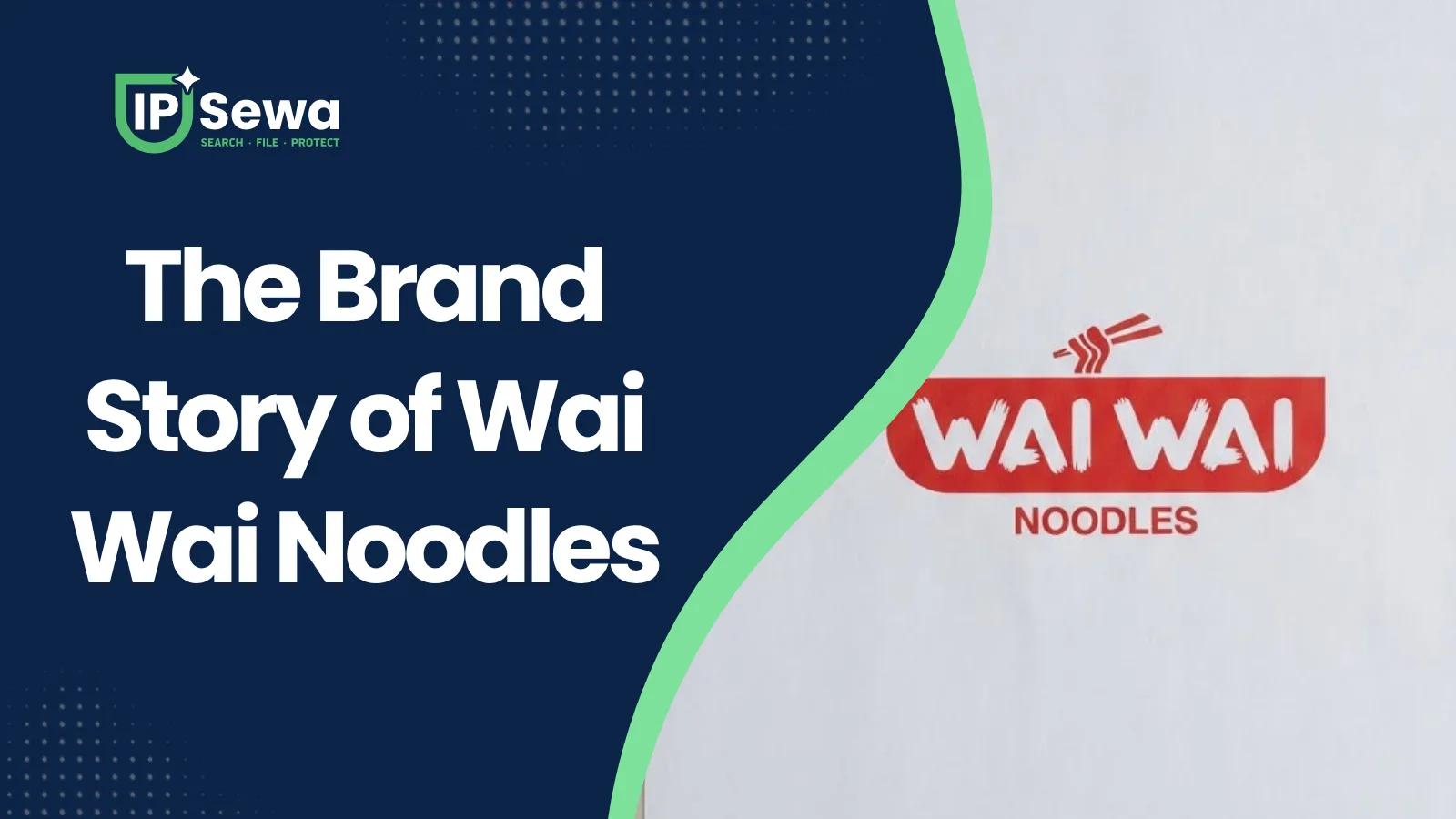
The Wai Wai trademark story shows why food brands should file early with Nepal’s Department of Industry (DoI). Under the Patent, Design and Trademark Act 1965 (PDTA), Nepal trademark registration follows a first-to-file approach, and an unopposed application commonly takes about 12–14 months to reach a registration certificate.
Key Takeaways
Food businesses should protect their core brand before distribution grows because the DoI assesses trademark applications under the PDTA and Nepal’s first-to-file system. For noodles and similar FMCG goods, NICE Class 30 is usually the starting point, but wider business activity can require separate applications in other classes.
- A Wai Wai-style household brand demonstrates the value of filing a distinctive wordmark before competitors enter the same shelf space.
- Nepal is first-to-file: the earliest valid application is critical, even where another trader claims earlier market use.
- NICE Class 30 covers noodles and many related food products, while each additional class needs its own application.
- The DoI process runs from filing and examination to Industrial Property Bulletin publication, opposition, registration and certificate.
- Any person may oppose a published trademark within the 90-day opposition window used in DoI practice.
- A registered trademark lasts seven years and can be renewed repeatedly for further seven-year terms.
- Food labels, logos, packaging appearance and retail services may need separate protection planning beyond one wordmark.
Why does the Wai Wai trademark story matter in Nepal?
The Wai Wai trademark story matters because a familiar noodle name can become one of a business’s most valuable assets only when its legal position is protected. The DoI registers trademarks under the PDTA, and the first-to-file Nepal rule makes delay risky for every FMCG brand, from masala noodles to tea and snacks.
Wai Wai is a useful public example of how product recognition and brand identity become closely linked. Consumers do not merely identify a packet of noodles; they recognise a name, visual presentation and expected product experience. That commercial recognition is powerful, but it is not a substitute for a registered mark.
A trademark is a word, symbol, picture or combination used to distinguish one business’s goods or services from another’s. A wordmark protects the name itself. A logo registration protects the graphic device shown in the application. Filing both may be sensible where both features are used prominently on a packet.
In practice, a founder often spends on packaging, distributors, shelf placement and social media before checking whether the proposed name can register. That is backwards. A prior confusingly similar mark may force a costly rebrand after inventory has already reached stores in Kathmandu, Pokhara and beyond.
What does first-to-file Nepal mean for food brands?
First-to-file Nepal means the earliest valid application has decisive importance in a trademark dispute, rather than who says they used a name first. The DoI issues trademark rights through registration under Sec. 16 and Sec. 18 of the PDTA, so prompt filing protects a food brand’s position before expansion.
Do not treat a company name, PAN record, domain name or Facebook page as brand registration. The Office of the Company Registrar (OCR) handles company incorporation, while the DoI handles trademarks. A business can have an incorporated company name and still lack a registered trade mark for its food products.
The PDTA does not allow registration of a mark that harms another trademark’s goodwill or is already registered in another person’s name. The DoI therefore examines applications for conflict and distinctiveness. A name that simply describes “tasty noodles” is weaker than an invented, memorable brand name.
For a growing FMCG business, the practical lesson is simple: choose a distinctive mark, search it, then file before announcing a major launch. You can begin by searching similar wordmarks through the Nepal trademark database search, but a logo and confusingly similar spellings deserve closer professional review.
Which NICE classes protect instant noodle and FMCG brands?
NICE Class 30 usually protects instant noodles, pasta and many flour-based food products in Nepal, while the NICE Classification divides goods and services across 45 classes. Sec. 18A requires a separate trademark application for each class, so Class 30 registration does not automatically cover retail services, soups or packaging materials.
Class 30 is the core filing for a Wai Wai-style noodle product. It can also be relevant to sauces, spices and other goods commonly sold alongside noodles. Your specification, meaning the list of goods or services in the application, should match what you genuinely sell or plan to sell.
Class 29 may matter if your range includes soup preparations or other qualifying preserved foods. Class 35 can matter for a business operating branded retail, wholesale or online sales services. Class 16 can be relevant to printed material, but a food packet’s visual appearance is not automatically protected simply because the food name is registered.
Use the NICE Class Finder to test likely classes, then check the wording carefully. A common mistake we see is filing only the product class while planning a branded shop, franchise or e-commerce service under the same name.
How do you register a Wai Wai-style food brand in Nepal?
You register a food brand by filing at the DoI, responding to examination, waiting for Industrial Property Bulletin publication and clearing the 90-day opposition period before certificate issue. An unopposed Nepal trademark registration commonly takes 12–14 months, while only the smoothest straightforward matters finish in about 6–8 months.
- Clear the name and logo. Search identical and similar marks, especially in Class 30 and any related class that reflects your real business model.
- Choose the applicant and classes. Confirm whether the owner is an individual, company or partnership, then prepare one application for each NICE class.
- Prepare the mark and documents. Use the exact spelling, logo version and goods-and-services description you intend to protect.
- File with the DoI. The application receives an acknowledgment reference and enters examination for registrability and conflicts.
- Address examination issues. If the DoI raises an objection, respond with a clear legal and factual explanation rather than changing the brand casually.
- Pass publication and opposition. A qualifying mark appears in the Industrial Property Bulletin, where another person may oppose it within 90 days.
- Complete registration and renew. Once registered, keep the certificate safely and calendar the seven-year renewal date for every class.
Foreign owners should file directly through a Nepal-based agent or representative. Nepal is not part of the Madrid System, so a foreign or international registration does not automatically extend to Nepal. A Paris Convention priority claim may be available in suitable cases, but it needs proper supporting documents.
Which documents does an FMCG trademark application need?
A domestic FMCG trademark filing normally needs an application form, trademark label, notarised Power of Attorney, company authority documents, industry certificate and current tax clearance. Foreign applicants also need supporting home-country trademark documents where applicable, and the DoI requires a Nepal-based representative because Nepal is outside the Madrid System.
| Item | Why the DoI needs it | Practical point for a food brand |
|---|---|---|
| Application form and mark label | Identifies the applicant, mark and class | Use the exact spelling and logo you will place on packets |
| Notarised Power of Attorney | Authorises the representative | It should be correctly signed, sealed and witnessed |
| Board resolution | Shows company approval to apply | Keep the applicant name consistent across all records |
| Industry certificate and tax clearance | Supports a domestic business filing | Check that current business details match the application |
| Priority or foreign registration papers | Supports a foreign or priority-based filing | Provide certified English documents where required |
Document needs can vary with the applicant and claim being made. For example, a local startup with no foreign priority claim does not need the same evidence as an overseas food manufacturer. This is general information, not legal advice; our team can review your filing position through our trademark registration service.
How long does registration take and what affects the cost?
Trademark registration commonly takes about 12–14 months from filing to certificate where no opposition arises, and a seven-year registration then needs renewal under Sec. 23B. Total cost depends on the number of NICE classes, government charges, document preparation, professional work and whether objections or opposition require a response.
One application covers one class in Nepal. That per-class structure is usually the largest planning issue for FMCG owners with noodles, sauces, retail services and promotional activity. Use the trademark fee calculator for a current estimate, or ask us for a filing plan before committing to multiple classes.
What legal rules and mistakes should FMCG owners know?
The PDTA governs Nepal trademark registration, with Sec. 18A requiring separate class applications, Sec. 21A addressing publication and Sec. 23B covering renewal. A registered mark lasts seven years and can be renewed repeatedly, but the DoI may cancel a mark not put into use within one year under Sec. 18C.
Do not use the ® symbol until registration is complete. You may use TM as a commercial notice, but it does not mean the DoI has accepted or registered the mark. A registration certificate is the formal proof of a registered mark in the relevant class.
Another mistake is assuming that a wordmark protects every packet design. The word “WAI WAI” style of brand recognition may involve a name, logo, colour arrangement, mascot or package appearance, but each element should be assessed separately. A distinctive product appearance may call for industrial design registration, while a logo may need its own trademark application.
Finally, protect the commercial reality, not just a slogan. Imagine “Himal Crunch Noodles,” a fictional Nepali brand that starts with masala noodles in Class 30 and later opens branded retail counters. Filing only for noodles may leave its retail service identity outside its original registration scope.
What are the alternatives for packaging, copycats and foreign expansion?
Trademark registration protects the brand sign, while industrial design registration can protect a product’s qualifying visual appearance for five-year renewable terms under Nepal’s industrial-property framework. The DoI handles both rights, but they solve different problems: a wordmark identifies source, whereas a design protects appearance.
If another applicant’s confusingly similar mark appears in the Industrial Property Bulletin, act within the opposition period. An opposition is a formal challenge asking the DoI not to register the mark. It is evidence-led work, and delay can weaken your options.
If a business sells abroad, check protection country by country. Nepal is outside the Madrid System, and its national registration does not create overseas rights. Equally, an overseas registration does not automatically cover Nepal. WIPO explains the international classification system through the World Intellectual Property Organization, but national filing rules still apply.
For the governing text and current institutional information, consult the Nepal Law Commission and the Department of Industry. Filing strategy and enforcement choices should be reviewed against your actual goods, label and commercial plans.
In short
The Wai Wai trademark lesson is that a successful food name needs legal protection before market success makes it expensive to fix. File the distinctive mark in NICE Class 30, add classes only where your business genuinely needs them, and follow the DoI process through Bulletin publication, opposition and seven-year renewal.
- Search before printing packets or appointing distributors.
- File the wordmark, logo or both according to how customers identify the product.
- Use separate applications for separate NICE classes.
- Keep the registration certificate and renewal dates for every class.
People also search for
Businesses researching the Wai Wai trademark story often need practical answers about packaged-food brands, brand naming and broader trademark protection in Nepal. These related guides explain the same DoI-centred process from different commercial angles, including food products, new businesses, digital identity and company brand strategy.
- How do I protect an FMCG packaged-food brand in Nepal?
- How does brand registration work in Nepal?
- What is the brand protection checklist for a new Nepal business?
- How do I choose a registrable brand name in Nepal?
- How can coffee and tea brands protect their names in Nepal?
- Should I protect my trademark, domain and social handles together?
Before you invest in your next packet design or product launch, search existing Nepal trademarks, review your class options through our free IP tools, and contact our team for practical filing and FMCG brand-protection advice.














Comments (0)
Leave a comment
Replying to — cancel