
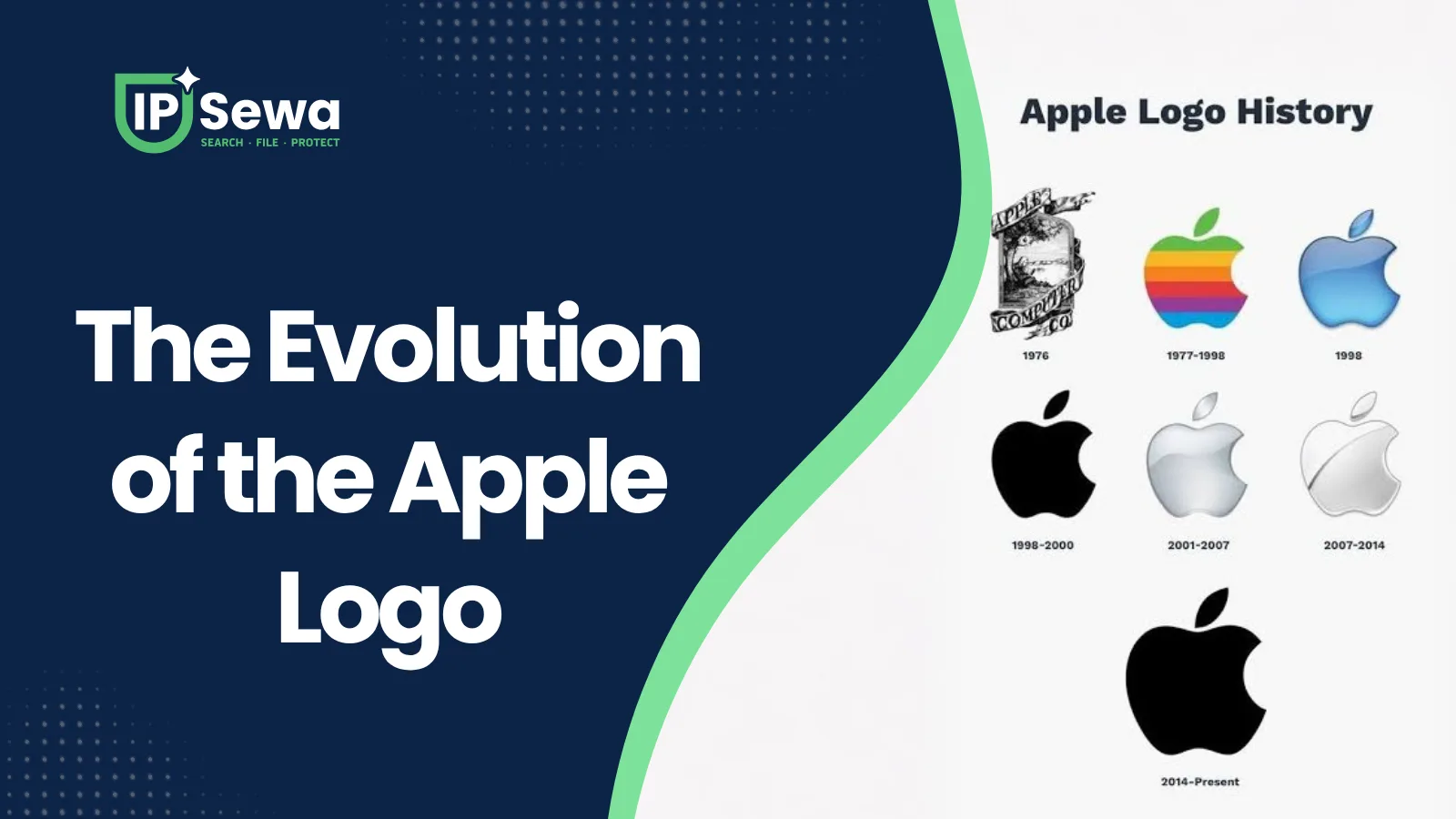
The Apple logo evolution shows how a simple symbol can gain strong recognition, but Nepal trademark registration still depends on filing first with the Department of Industry under the Patent, Design and Trademark Act 1965. A clear, distinctive logo filed in the right class usually takes about 12–14 months to reach registration when unopposed.
Key Takeaways
The Department of Industry protects a logo in Nepal only after valid registration, not because a brand is famous abroad. Apple’s changing apple symbol offers a useful lesson: protect the exact visual version you use, select the right NICE Classification classes, and file before a competitor does.
- Nepal is first-to-file, so the earliest valid application matters more than prior use or overseas fame.
- The Apple logo evolution shows how visual consistency can build distinctiveness, but local registration remains essential.
- Nepal uses the NICE Classification’s 45 classes, and one trademark application covers one class only.
- Technology brands commonly consider Classes 9, 35, 38 and 42, depending on their actual goods and services.
- The Department of Industry examines, publishes and registers trademarks under the Patent, Design and Trademark Act 1965.
- Publication in the Industrial Property Bulletin opens a 90-day opposition window before a registration certificate is issued.
- A trademark registration lasts seven years and can be renewed repeatedly in further seven-year terms.
Why does Apple logo evolution matter for trademark distinctiveness in Nepal?
Apple logo evolution matters because it shows how an unusual visual sign can become strongly associated with one source over time. Under Sec. 18 of the Patent, Design and Trademark Act 1965, however, the Department of Industry assesses whether a mark can distinguish goods or services and whether it conflicts with another person’s goodwill.
Apple’s earliest corporate image was a detailed illustration featuring Isaac Newton. It was soon replaced by the much simpler bitten-apple device, which has appeared in coloured and later monochrome forms. The commercial lesson is practical: a logo does not need to explain every product. It needs to be memorable, consistently used and legally clear.
Distinctiveness means that customers can see a sign as identifying one business rather than describing a product. A generic phone outline for a mobile shop is weak. A made-up word with an original icon is usually easier to distinguish. The DoI does not grant a registered mark merely because a design looks attractive or has been used on social media.
Global fame can help explain a brand’s reputation, but it is not a substitute for a Nepali filing. Nepal is a first-to-file jurisdiction. If your Kathmandu startup launches a new logo for apps, accessories and repair services, filing early is safer than waiting for customers to recognise it.
How do you register a changing logo in Nepal?
You register a logo by filing the exact wordmark, symbol or combined device with the Department of Industry, followed by examination, Industrial Property Bulletin publication, a 90-day opposition period and registration. Under Sec. 18A, a separate application is required for each NICE class, even if the same logo appears across the business.
- Clear the mark first. Search identical names, similar spellings and visually close device marks. Start with the public Nepal trademark database search, then assess the results in the classes that matter to you.
- List your goods and services. Write down what you sell now and what you genuinely plan to offer soon. A phone maker, an app developer and an electronics retailer may need different classes.
- Choose the filing version. File the logo you intend to use. If colour is a key feature, show it clearly. If the business name is also valuable, consider protecting the wordmark separately from the icon.
- Submit the application. The application goes to the DoI with the required documents and clear label specimens. Each class needs its own application.
- Address examination issues. The DoI checks for conflict, registrability and other concerns. A timely, focused reply can prevent avoidable delay.
- Wait through publication and opposition. A mark accepted for publication appears in the Industrial Property Bulletin. Another party may oppose within 90 days.
- Obtain and maintain the certificate. If the application proceeds, the DoI issues a registration certificate. Record the renewal date and use the mark consistently.
Which NICE classes can protect a technology logo in Nepal?
The NICE Classification divides goods and services into 45 classes, and Nepal requires one application for each class under Sec. 18A. For a technology business, Class 9 may cover devices and software, while Classes 35, 38 and 42 may protect retail, telecommunications and technical services respectively.
Class selection should follow your real business model, not a competitor’s filing list. Class 9 can fit downloadable software and electronics. Class 35 can fit retail and online store services. Class 42 can fit software development, hosting and cloud services. Class 38 may matter where the business provides communication or data transmission services.
A common mistake we see is filing only for physical products while ignoring the service side of the business. For example, a fictional Nepali brand called Himal Byte sells smart-home devices, operates an online shop and provides a cloud-control app. One class may not cover all three activities.
Use the NICE class finder to explore the wording that fits your goods and services. It is a useful starting point, but class choice should be checked against your actual launch plan. Filing broadly without a commercial reason can add unnecessary work and cost.
What documents does the Department of Industry require for a logo filing?
The Department of Industry requires an application form, clear trademark labels and supporting ownership documents before it can examine a logo application. Domestic companies commonly provide a notarised Power of Attorney, board resolution, industry certificate and current tax clearance, while foreign applicants need local representation and additional foreign registration records where applicable.
- A completed trademark application for the chosen class.
- Clear specimens or labels showing the logo exactly as filed.
- A notarised Power of Attorney signed by the applicant and attested by two witnesses.
- A company board resolution where the applicant is a company.
- An industry certificate and latest tax clearance letter for a domestic applicant.
- Priority-claim papers in English, if a Paris Convention priority claim is being made.
- For a foreign applicant, a certified or notarised home registration certificate in English where required.
Nepal is not part of the Madrid System, so a foreign company cannot extend an international trademark registration into Nepal through Madrid. It must file directly through a Nepal-based agent or representative. Nepal is, however, linked to the Paris Convention framework, which can be relevant to a properly supported priority claim. The World Intellectual Property Organization explains the international classification and treaty context.
How long does Nepal trademark registration take and what affects the cost?
Nepal trademark registration usually takes about 12–14 months from filing to certificate when unopposed, although an unusually straightforward matter may finish in 6–8 months. The Department of Industry’s examination, Bulletin publication and 90-day opposition stage all affect timing, while each NICE class adds a separate application and cost component.
Total cost depends on the number of classes, whether the applicant is domestic or foreign, the quality of the initial clearance work, document preparation and whether an objection or opposition arises. There are government charges and professional charges. Do not assume a single-class filing protects every activity bearing the logo.
For a current estimate based on your class count and applicant details, use the trademark fee calculator or ask our team for guidance. This article is general information, not legal advice; facts and filing strategy should be checked for your specific mark before submission.
What happens if a business changes its logo after registration?
A material logo redesign usually needs a fresh Nepal trademark application because the registration certificate protects the mark that the Department of Industry examined and registered. A seven-year registration does not automatically extend to a substantially altered icon, colour arrangement or combined word-and-device mark.
Think of Apple’s progression from an intricate illustration to a clean bitten apple. Those are not minor production changes; they are materially different visual signs. By contrast, a careful adjustment to spacing or a small technical update may raise a closer question. The practical test is whether an ordinary customer would see the new mark as essentially the same sign.
Where a logo and business name are both central, separate filings can provide more flexibility. You may keep the name protected even if the icon changes, and retain the icon if the trading name changes. A logo is not the same as company registration at the Office of the Company Registrar (OCR); business-name registration does not replace trademark registration.
What mistakes weaken logo protection for Nepali businesses?
The most damaging logo mistakes are filing too late, choosing the wrong NICE class, using an unclear label and treating an OCR company name as trademark protection. Sec. 18C also permits cancellation where a registered trademark is not put into use within one year, so registration should support a real commercial plan.
| Common mistake | Why it creates risk | Better approach |
|---|---|---|
| Copying a familiar visual idea | A similar logo can conflict with an earlier registered mark or its goodwill. | Search names, device elements and related classes before design approval. |
| Filing only one business activity | Products, retail and software services can fall in different NICE classes. | Map present and near-term activities class by class. |
| Changing the design without review | The new logo may sit outside the scope of the existing registration. | Compare the old and new versions before public launch. |
| Missing renewal planning | The right can be cancelled if it is not renewed within the permitted period. | Record the seven-year renewal date as soon as the certificate issues. |
DoI decisions focus on the mark before it, the relevant goods or services and earlier rights. A black-and-white search may miss visual similarity, especially for figurative logos. In practice, ask whether the overall impression, not just one letter or colour, could lead buyers to assume two businesses are connected.
How can founders apply the Apple logo lesson without copying Apple?
Founders can apply the Apple logo evolution lesson by choosing an original, simple sign and protecting it early through the Department of Industry. The goal is not to imitate a famous icon; it is to build a mark that identifies your own goods or services clearly under the Patent, Design and Trademark Act 1965.
Imagine a Pokhara company launching solar-powered trekking lights under the brand Juneli Trail. A mountain-and-moon device may look appealing, but many outdoor brands use mountains. Adding a distinctive original arrangement, filing the wordmark and logo, and selecting the relevant goods class gives the business a more defensible starting point.
Use TM as a commercial claim with care, and use ® only after registration. If another applicant’s Bulletin publication threatens your earlier registered mark, opposition is a formal process before the DoI, not a social-media dispute. Our team can help you assess filing, objection and opposition issues through direct trademark guidance in Nepal.
In short: Apple’s logo changed from a detailed picture into a simple global symbol, but the Nepali lesson is straightforward: make your logo distinctive, search early, file the exact version you use in each relevant NICE class, and renew the registration every seven years.
People also search for
These related guides explain the practical choices behind logo ownership, brand redesigns and registration in Nepal. Each topic connects to the same first-to-file system administered by the Department of Industry, where the exact mark, its NICE class and its filing history can determine whether a business secures a registration certificate.
- The story behind the Apple logo
- Apple’s trademark and brand history
- Logo, wordmark or icon: what to register first
- What makes a logo legally protectable?
- Why big brands redesign their logos
- How to register a logo as a trademark in Nepal
- Do you really own your logo? Common myths
Before committing to a new logo, search the Nepal trademark database, then speak with our team through IP Sewa contact support about the right classes and filing plan under our trademark registration service.













Comments (0)
Leave a comment
Replying to — cancel