
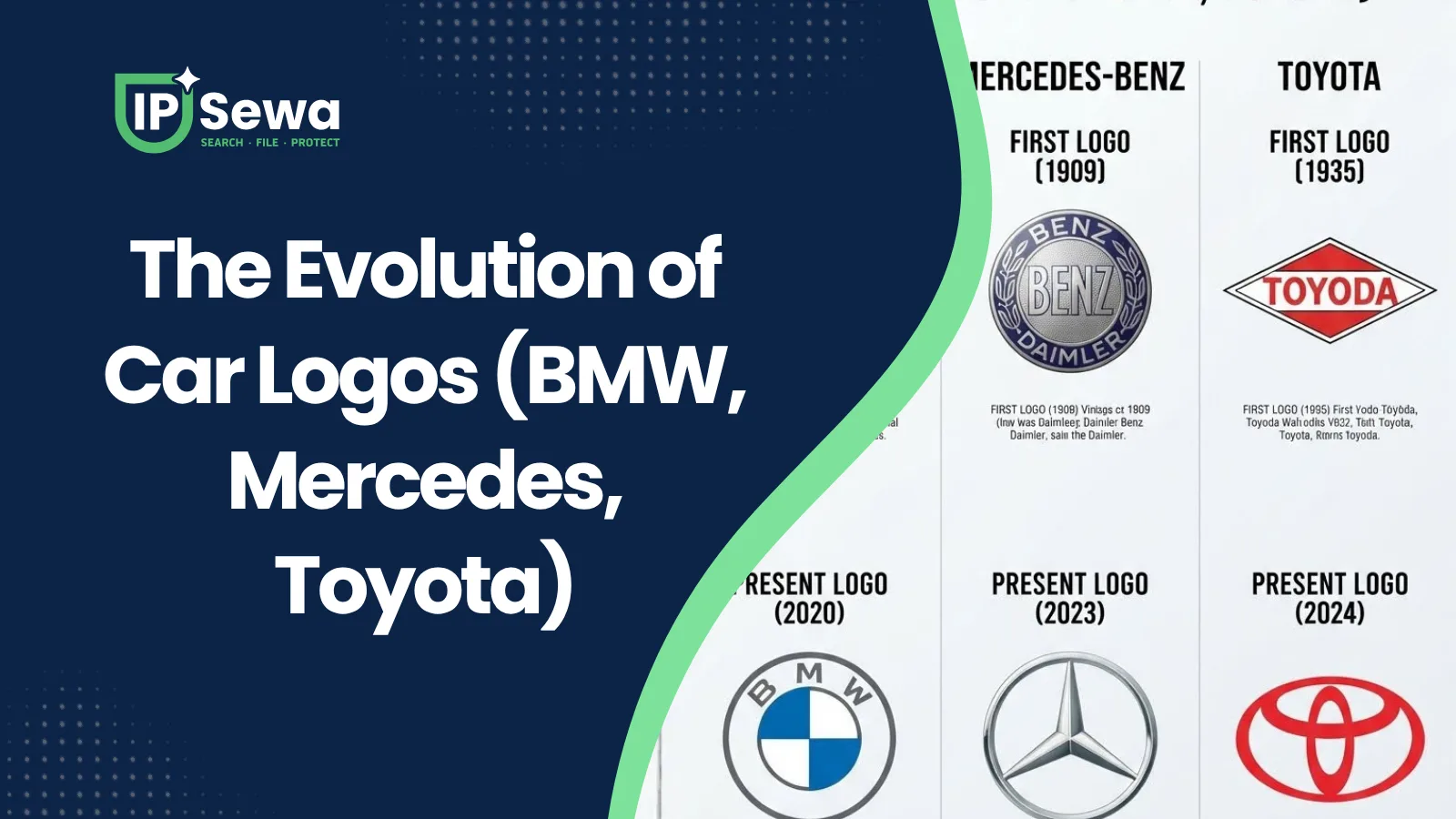
Car logo evolution can require a new trademark registration in Nepal when a redesigned badge, icon or wordmark creates a materially different mark. The Department of Industry (DoI) examines each application under the Patent, Design and Trademark Act 1965, with an unopposed registration typically taking about 12–14 months.
Key Takeaways
Automotive brand protection in Nepal starts with the DoI, which applies the first-to-file rule under the Patent, Design and Trademark Act 1965. A vehicle logo usually needs NICE Class 12 coverage, but dealerships, workshops, software and lubricants may require separate class applications and separate registration certificates.
- A redesigned car badge is not automatically protected by an older logo registration.
- Nepal is first-to-file, so the first valid application matters more than earlier market use.
- NICE Class 12 covers vehicles and many vehicle parts, not every automotive business activity.
- One trademark application covers one NICE class in Nepal.
- The process is filing, DoI examination, Bulletin publication, a 90-day opposition period, registration and certificate.
- A trademark registration lasts seven years and can be renewed in further seven-year terms.
- Foreign automotive owners must file directly in Nepal through a Nepal-based representative because Nepal is not in the Madrid System.
Why does car logo evolution matter for trademark protection?
Car logo evolution matters because the DoI assesses the mark shown in the application, not the general history of a manufacturer. Under Sec. 18 of the Patent, Design and Trademark Act 1965, a mark that harms another mark’s goodwill or is already registered to someone else may be refused.
BMW, Mercedes and Toyota are useful examples of a wider brand pattern: detailed historic emblems often become flatter, simpler and easier to display on a vehicle screen, charging app or dealership sign. A modernised logo may preserve recognisable elements, yet its drawing, proportions, colour treatment or word component can be materially different.
That difference needs a filing decision. An old registration may still protect the old label, but it does not safely substitute for a substantially changed icon or wordmark. In practice, filing the refreshed logo alongside the legacy version creates a clearer record of what you use now.
A trademark is a word, symbol, picture, or combination used to distinguish goods or services. It differs from a company name registered through the Office of the Company Registrar (OCR). OCR registration helps establish a company; it does not replace trade mark registration at the DoI.
Which NICE classes apply to an automotive trademark in Nepal?
NICE Class 12 is the core class for cars, motorcycles, trucks and many vehicle parts in Nepal’s 45-class NICE Classification system. Sec. 18A requires a separate application for each class, so a vehicle maker’s badge may need further filings for retail, repairs, software or lubricants.
Class selection should follow your actual or planned offer. A local distributor selling electric scooters may begin with Class 12, then need Class 35 for retail services and Class 37 if it operates a repair centre. A connected-car app can raise Class 09 issues. Do not list classes merely because competitors use them.
Use the NICE class finder to test goods and service descriptions, then check the wording against the product plan. The NICE Classification is maintained internationally through WIPO, but the application is filed and decided nationally by Nepal’s DoI.
How do you register a redesigned car logo in Nepal?
Registering a redesigned car logo begins with a conflict search and ends with a DoI certificate after publication in the Industrial Property Bulletin. The DoI examines distinctiveness and earlier marks under Sec. 18, while any person may oppose publication during the 90-day opposition window used in trademark practice.
- Search first. Check exact names, similar spellings and visually close badges in Class 12 and related classes through the Nepal trademark database. A logo search should include words, device elements and likely variants.
- Decide what to file. Identify whether the new badge, a wordmark, a combined logo, or each of these needs protection. Choose the correct NICE class and goods or services.
- Prepare the application. Submit the prescribed application, label specimens and supporting ownership documents to the Department of Industry.
- Answer examination points. If the DoI raises a similarity or distinctiveness issue, respond with a clear explanation and relevant evidence through the proper process.
- Complete publication and registration. Once published in the Industrial Property Bulletin, the mark faces the opposition period. If it proceeds, complete registration steps and obtain the certificate.
The official Department of Industry website identifies the authority responsible for industrial property. A filing is not the same as registration: use TM carefully while an application is pending, and use ® only for a registered mark.
What documents are needed for automotive trademark registration?
Trademark registration requires an application form, a clear label of the automotive mark and authority documents that identify the applicant to the DoI. Domestic and foreign applicants have different supporting records, while a priority claim under the Paris Convention needs certified filing material in English where applicable.
A Nepali company commonly provides a notarised Power of Attorney, board resolution, label of the mark, industry certificate and current tax clearance. The Power of Attorney should be properly signed, sealed and witnessed. Four mark specimens are normally prepared with the filing material.
A foreign manufacturer normally provides the application, notarised Power of Attorney, board resolution, mark label and a certified or notarised home registration certificate in English. If claiming Paris Convention priority, it also needs the relevant certified filing receipt or application record. Nepal is party to the Paris Convention, but it is not in the Madrid System, so an international registration does not automatically cover Nepal.
How long does an automotive trademark take and what affects cost?
An unopposed automotive trademark registration typically takes about 12–14 months through the DoI, although the smoothest straightforward cases may finish in roughly 6–8 months. Cost depends mainly on the number of NICE classes, government charges, professional work and whether examination or opposition creates extra work.
| Factor | Why it changes the total | Practical response |
|---|---|---|
| Number of classes | Each class requires its own application and registration process. | Start with the vehicle, service or product lines you genuinely use. |
| Logo and wordmark scope | A badge and brand name may need separate protection decisions. | Review each asset before public launch. |
| Examination issues | Similarity objections can require legal analysis and a response. | Search early and avoid marks that are too close to earlier entries. |
| Opposition | A challenge after Bulletin publication can extend the matter. | Keep evidence of ownership, use and brand development organised. |
There is no useful one-size figure for an automotive portfolio. Use the trademark fee calculator for a current starting estimate, or ask our team through IP Sewa’s contact page about the classes and work your proposed filing requires.
What legal rules govern automotive trademarks in Nepal?
The Patent, Design and Trademark Act 1965 governs automotive trademark registration in Nepal, with the DoI acting as registrar and quasi-judicial authority. Sec. 16 links trademark rights to registration, Sec. 18 covers registration decisions, and Sec. 18A requires separate applications for separate classes.
The first-to-file rule is especially important during a logo refresh. Earlier commercial use can be useful evidence in a dispute, but it is not the safer substitute for securing the new application. The Act also restricts use of “registered trademark” status without registration under Sec. 18B.
Registration lasts seven years from registration and is renewable in further seven-year terms. Renewal should be planned before expiry; missing the applicable deadline can put an automotive trademark at risk. The statutory text is available through the Nepal Law Commission.
What mistakes do automotive businesses make during logo redesigns?
Automotive businesses often launch a redesigned badge before checking the DoI register, then discover a similar Class 12 mark or miss related service classes. Because trademark opposition follows Industrial Property Bulletin publication for 90 days, a rushed filing can turn a planned vehicle launch into a contested registration problem.
- Assuming a global registration covers Nepal. It does not; Nepal needs a direct national filing through a local representative.
- Searching only exact words. Similar sounds, spellings and visual elements can matter in examination.
- Filing only the combined badge and name. Consider whether the name or emblem also needs its own application.
- Using another party’s dealership registration as protection. Ownership and authorised use should be recorded clearly.
- Forgetting renewal. A strong brand can still be lost if its registered mark is not renewed.
How would a Nepal automotive logo filing work in practice?
Imagine “Himal EV Motors,” a Kathmandu electric-scooter distributor, replacing its mountain-wheel badge with a flat circular icon for vehicle screens. The DoI would assess the new device as filed in NICE Class 12, while Class 35 and Class 37 may also matter if the business operates retail and repair services.
The business should search the old name, the revised name and visually similar icons before printing helmets, showroom boards or charging-app graphics. If the new symbol is sufficiently different from the old one, filing it as a fresh logo application is usually the prudent route rather than assuming the original certificate covers it.
If another applicant’s similar mark appears in the Industrial Property Bulletin, the owner must act within the trademark opposition period. Our team can help assess a conflict, prepare an opposition strategy and pursue the appropriate opposition or enforcement support. This article is general information, not legal advice for a particular dispute.
What alternatives apply if the logo is not ready or is not distinctive?
A business can protect a distinctive wordmark first while finalising a vehicle badge, but the DoI still examines that wordmark under Sec. 18 and the relevant NICE class. If a logo lacks distinctiveness or closely resembles an earlier mark, redesigning before filing may be safer than defending a weak application.
A purely decorative vehicle shape may raise industrial design questions rather than trademark questions. A new technical battery system or charging mechanism may call for patent registration instead. These rights protect different things: a trademark identifies commercial origin, a design protects visual appearance, and a patent protects a qualifying invention.
Do not confuse a logo redesign with a simple ownership change. Assignment, licensing and record changes need their own documentation. If your automotive brand already has a registration, review its exact label, class and renewal date before deciding whether a fresh application, renewal or record update is needed.
In short: car logo evolution is a filing issue as well as a design issue. Protect the current badge and wordmark in the correct NICE classes, search before launch, and plan for the DoI’s examination, Bulletin publication and seven-year renewal cycle.
What do people also search for about car logo evolution?
These related guides explain logo redesign, legal protectability and the separate history behind well-known vehicle branding. They complement the DoI registration process and NICE Class 12 planning described above, particularly for founders deciding whether to protect a name, icon or combined automotive mark in Nepal.
- Why do big brands redesign their logos?
- Toyota’s trademark and brand history
- The evolution of famous brand logos
- What makes a logo legally protectable?
- Should you register a logo, wordmark or icon first?
- How do you register a logo as a trademark in Nepal?
- What is the difference between a logo and a brand?
Before releasing a redesigned automotive mark, search existing Nepal trademarks, review the available trademark registration support, and contact our team for filing advice tailored to your classes and brand assets.













Comments (0)
Leave a comment
Replying to — cancel