
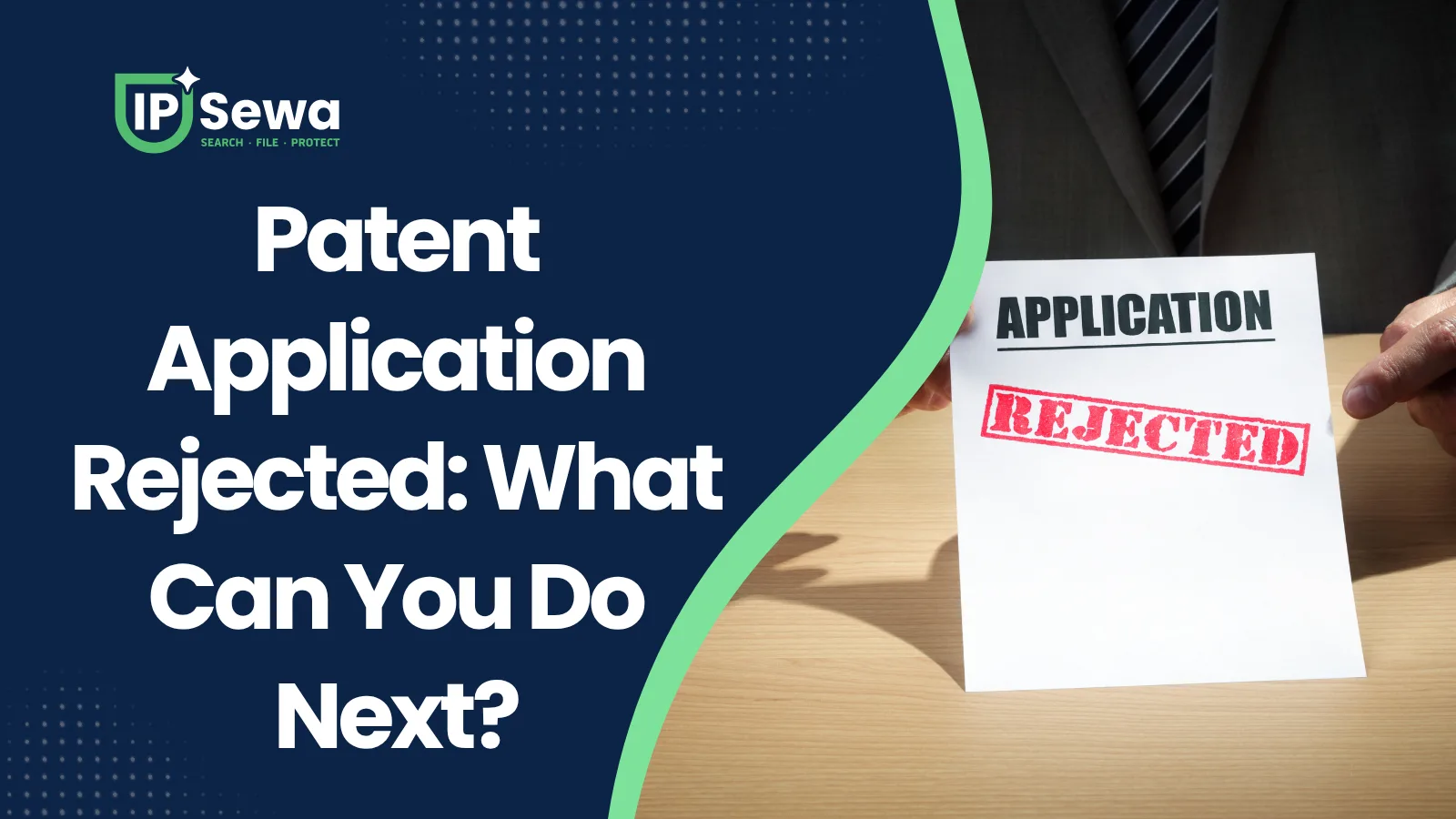
A patent application rejected by Nepal’s Department of Industry (DoI) may still be recoverable. Review the objection, answer it within the stated time, and amend the specification or claims where permitted under the Patent, Design and Trademark Act 1965. If the invention is mainly visual, industrial design protection may be a better route.
Key Takeaways
A patent refusal in Nepal requires a prompt, ground-by-ground response to the Department of Industry, because the original filing date, technical disclosure, and available remedies can affect your commercial rights. The PDTA 1965, DoI examination, and the patent opposition process all matter before you decide to abandon, refile, or change protection.
- The DoI examines whether a patent application describes an invention that is new and useful under Sec. 3–4 of the PDTA 1965.
- A refusal can arise from technical grounds, incomplete disclosure, unclear claims, missing documents, or other formal defects.
- You may be able to clarify or narrow claims, but an amendment should not add new technical matter after filing.
- Nepal follows first-to-file principles, so abandoning and refiling can expose your invention to intervening applications.
- Patent publication is followed by a 35-day opposition period for interested persons.
- Industrial design protection covers visual appearance, not the technical working of a product.
- IP Sewa can help review the objection, prepare a response, and handle patent or design filing work through the DoI.
Why does the DoI reject a patent application in Nepal?
The DoI rejects a patent application when the claimed invention does not meet Nepal’s legal requirements or the filing has defects that prevent proper examination. Under Sec. 3–4 of the PDTA 1965, the central questions are whether the invention is new and useful, supported by a sufficient description, and presented in an acceptable form.
Lack of novelty means the claimed invention was already known, used, published, or disclosed before the relevant filing date. Prior art may include patents, technical publications, products in the market, public demonstrations, or your own earlier disclosure. A public product launch, investor presentation, or online video can therefore create problems.
Lack of utility means the application does not show a practical use for the invention. A claim must do more than describe an idea. It should explain how the technical solution works and what useful result it provides.
Some applications fail because the specification is too short or unclear. The specification is the detailed technical description. Claims define the legal boundary of protection. If the description does not support the claims, the examiner may object even when the underlying product is genuinely useful.
Formal issues can also delay or undermine an application. These may include an incomplete prescribed form, an unsuitable Power of Attorney, unclear drawings, missing priority papers, or inconsistent applicant details. A technical refusal and a document defect need different responses. Do not treat both as the same problem.
What should you do after receiving a DoI patent objection?
You should first identify every objection in the DoI communication, then prepare a written response that answers each point with evidence, explanation, or a lawful amendment. The deadline comes from the official notice or direction. Missing it can place the application at risk, so confirm the date immediately.
- Secure the complete file. Collect the application, specification, claims, drawings, priority papers, correspondence, and the latest DoI objection or examination report.
- Separate the issues. Mark each point as novelty, usefulness, claim clarity, disclosure, drawing, document, ownership, or another formal concern.
- Review the cited material. Compare the examiner’s reference with each claim. Identify the technical feature that is actually different, rather than making a broad statement that your product is “unique.”
- Choose the response. You may argue that the objection is mistaken, clarify the existing disclosure, or narrow claims to features already described in the original filing.
- File a complete reply. Submit the written response and supporting documents to the DoI in the required manner and retain proof of filing.
- Track the result. The DoI may continue examination, accept the application, request more information, or maintain the refusal. Ask for advice before withdrawing or refiling.
Do not use a trademark conflict tool as a substitute for patent prior-art research. A trademark database checks brand records, not technical literature. For a proper patent assessment, explain the invention, its date of disclosure, and the references already identified. IP Sewa’s patent registration team can help with technical drafting, filing, and prosecution at the DoI.
Can you amend a patent application after a refusal?
You can often clarify, narrow, or restructure patent claims during examination, but an amendment must remain connected to the invention disclosed in the original application. It should answer the DoI objection without introducing new technical matter or changing the filing into a different invention.
A useful amendment may remove an over-broad claim, define a missing technical relationship, correct inconsistent terminology, or focus on a feature that distinguishes the cited prior art. The commercial question matters too. A very narrow claim may survive examination but offer little protection against competing products.
Adding new matter after filing is risky because it may receive no benefit from the original filing date. You should not insert a new mechanism, component, process step, or result simply because it would make the claim stronger today. The original specification must support the proposed wording.
Arguments and amendments work together. If the examiner misunderstood a disclosed feature, explain where it appears and how it changes the result. If the feature was not clearly claimed, a carefully supported amendment may help. Unsupported assertions such as “this is obviously different” rarely answer a technical objection.
What documents are needed for a patent refusal response?
A patent refusal response normally needs the DoI communication, the original application, revised claims or specification pages, and a clear written explanation. The exact package depends on the objection. Priority claims may also require certified or notarised foreign filing records or registration documents.
- Copy of the patent application and its acknowledgment or application number.
- Original specification, claims, abstract, and technical drawings.
- DoI examination report, objection letter, or hearing communication.
- Marked-up and clean versions of any proposed amended claims or description.
- Written arguments matching each objection with the relevant technical disclosure.
- Notarised Power of Attorney where a representative files or acts for the applicant.
- Certified or notarised foreign filing receipt or application where a priority claim is made.
- Certified or notarised foreign patent registration certificate where the applicant relies on a foreign patent.
Keep the document set consistent. The applicant name, inventor details, title, priority information, and drawings should not conflict across pages. Foreign documents may need suitable English copies and local filing support. The DoI’s official information and statutory material should be checked before submission; the Department of Industry website is the appropriate government starting point.
How long does a patent refusal response take in Nepal?
A response must follow the deadline in the DoI notice, while the wider patent process commonly takes about 12–14 months from filing to certificate when unopposed. The smoothest straightforward matters may finish in about 6–8 months, but an objection, amendment, hearing, or opposition can extend the process.
The response itself may be prepared quickly when the objection is limited to a missing document. Technical objections need more time because the claims, prior art, and original disclosure must be compared carefully. Do not wait for the final days to obtain foreign certificates, signatures, translations, or technical input.
If the DoI accepts the application, it is published for public information. An interested person may object within 35 days of publication. A valid objection can lead to further inquiry and delay registration. Patent rights are not safely treated as complete until the DoI registers the patent and issues the certificate.
What does a patent refusal cost to fix?
The cost of correcting a patent refusal depends on the official filing requirements, professional work, technical complexity, and number of response rounds. Nepal’s cost structure can include separate government and professional components, so a single universal figure would mislead applicants.
Simple document corrections usually require less work than a prior-art dispute involving several claims. Costs can rise where an engineer must explain the technology, foreign records require certification, drawings need revision, or a hearing and opposition must be handled. Refiling also creates a separate application and should not be chosen merely to avoid answering an objection.
Ask for a current assessment through IP Sewa’s contact team. Share the objection letter, application number, filing date, and a short description of the invention. That allows a professional to identify the likely work before discussing government and service costs.
Should you appeal a patent refusal in Nepal?
A patent appeal in Nepal should begin with the actual DoI decision and the remedy available at that stage, because an examination objection is not the same as a final refusal. Obtain the written decision, preserve the record, and seek advice on review, hearing, amendment, or another lawful response under the PDTA 1965.
Applicants sometimes call every examiner letter a “patent appeal.” That can create confusion. A pending objection usually calls for prosecution: answer the examiner and keep the application moving. A final adverse decision may require a different administrative or legal step. The correct route depends on the document issued and the procedural stage.
Prepare a strong record from the start. Keep earlier versions of the specification, filing proof, technical test material, cited references, and all DoI correspondence. A professional can then assess whether the decision misapplied the facts, whether a narrower claim remains valuable, and whether a new application would create a priority problem.
This article gives general information, not legal advice. For a refusal already issued, obtain advice before withdrawing, publishing the invention, or filing a replacement application.
When is industrial design protection a better option?
Industrial design protection may suit a product whose value lies in its visible shape, pattern, ornament, or overall appearance rather than its technical operation. In Nepal, a design is a separate right from a patent, begins with a fresh application, and has a five-year renewable term under DoI practice.
Imagine a Kathmandu maker develops a reusable water bottle. A new valve that prevents leakage may support a patent application. A distinctive faceted body, lid pattern, or ornamental surface may support industrial design protection. The same product can sometimes need both rights, but each application protects a different feature.
A design application does not automatically convert a refused patent. You must prepare and file a fresh design application with suitable representations, including the views needed to show the claimed appearance. Do not rely on a design to protect how a product works.
Patent and design opposition periods also differ. A patent application has a 35-day opposition period after publication. Industrial designs have their own examination and opposition process. Confirm the current filing requirements before choosing the alternative route; the industrial design service can help assess the visual scope.
What happens if you abandon or refile a refused patent?
Abandoning or refiling a refused patent can remove the practical value of the original filing date. Nepal’s first-to-file system rewards the earliest valid application, so a replacement filing may face intervening applications, public disclosure, or a competitor who filed during the gap.
| Situation | What it means | Practical response |
|---|---|---|
| Examiner objection received | The application may still be defended or amended. | Read the notice and answer every ground before the deadline. |
| Response deadline missed | The application may stop progressing or be treated as abandoned. | Ask the DoI or representative about the current procedural position immediately. |
| Voluntary withdrawal | The original filing position is not safely carried into a new application. | Check priority and disclosure risks before withdrawing. |
| Final refusal | The DoI has maintained an adverse decision at that stage. | Obtain the written decision and assess available review or legal steps. |
| Visual feature remains valuable | The technical patent route may not be the only option. | Consider a separate industrial design application. |
Do not publish extra technical details while deciding what to do. Public disclosure can affect novelty and may make a later filing harder. The same caution applies to demonstrations, sales, online posts, and detailed investor materials.
How can you reduce the risk of a future patent refusal?
You can reduce patent refusal risk by checking disclosure history, researching prior art, defining the technical contribution, and drafting claims that match the specification before filing at the DoI. Early preparation cannot guarantee registration, but it helps expose weak claims and missing documents while changes are still possible.
Start by recording the invention’s development and every public disclosure. Then describe the problem, the technical solution, the components or steps, and the useful result. Drawings should support the explanation rather than replace it. Claims should protect the real technical contribution, not every benefit you hope the product will provide.
Do not confuse a patent search with a trademark search. A brand name belongs in the trademark system; a technical invention needs prior-art research. Nepal also has no PCT route that automatically grants protection locally. Foreign applicants generally need a direct Nepal filing through a Nepal-based agent or representative, with any Paris Convention priority handled correctly.
The WIPO explanation of international intellectual-property systems is useful background, but it does not replace a national DoI filing. For the governing statute, consult the Nepal Law Commission’s legal resources and obtain case-specific advice before relying on an amendment or appeal strategy.
In short: what is the best next step after patent refusal?
The best next step after a patent application rejected in Nepal is a prompt file review, not automatic refiling. Identify the DoI’s exact grounds, protect the original filing position, answer with supported amendments or arguments, and assess industrial design protection only for visual features. A written decision should be reviewed before any appeal or withdrawal.
- Keep the original application, filing proof, and all DoI notices together.
- Separate technical objections from formal document defects.
- Never add undisclosed technical matter through an amendment.
- Remember the patent term is seven years and can be renewed twice.
- Prepare for publication and the 35-day patent opposition period after acceptance.
People also search for
- How to register a patent in Nepal
- Patent application process in Nepal
- What can be patented in Nepal?
- What cannot be patented in Nepal?
- How to conduct a patent search in Nepal
- Industrial design versus patent protection in Nepal
- Patent renewal in Nepal
If your patent application has been rejected, send the DoI objection and application details to IP Sewa’s team. You can also review our patent filing and prosecution help and use the available IP tools to prepare your next decision.













Comments (0)
Leave a comment
Replying to — cancel